E-mail Us at info@wingtupet.com
Call Us at Wingtu Pet | Whatsapp +1- 626 734 5510

Get A Quote
A good harness is not just a fashion item. It is a piece of safety gear. It acts as the link between you and your dog’s power. If the design is wrong, that force can press on their airway. It can stop their legs from moving right. It might even let your dog slip out and escape.
Many dog owners naturally grab harnesses that look “soft” or “cute.” They often miss the mechanics needed for safe daily use.
Here is what you need to look for to ensure safety, comfort, and the right body movement.
1. Structure First: Respect the Shoulder Movement
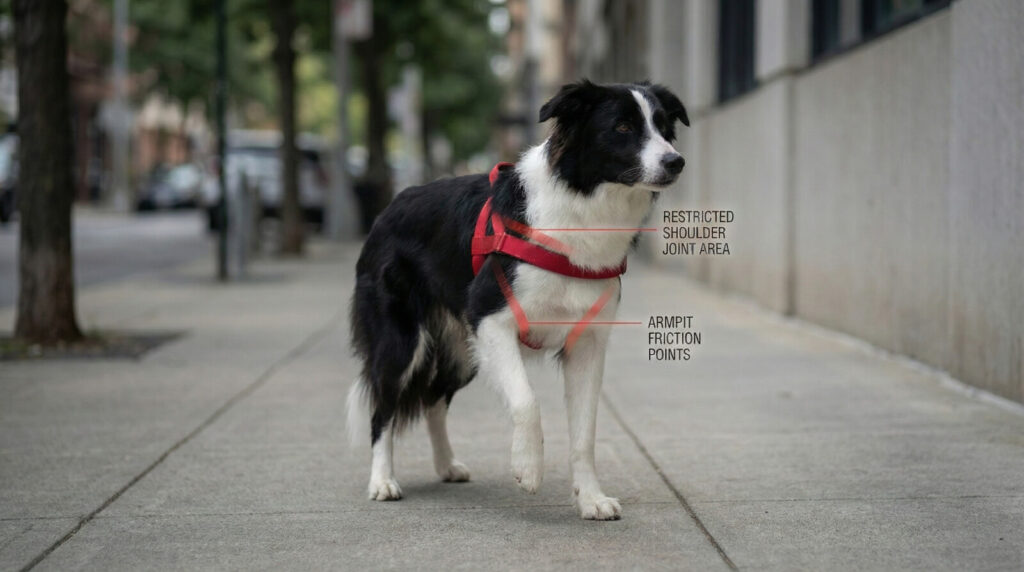
Most owners make a simple mistake. They pick a harness just because it is easy to put on. This often leads them to “Norwegian-style” options or straight-bar designs. These go right across the chest. It is quick, sure. But it blocks your dog’s front movement.
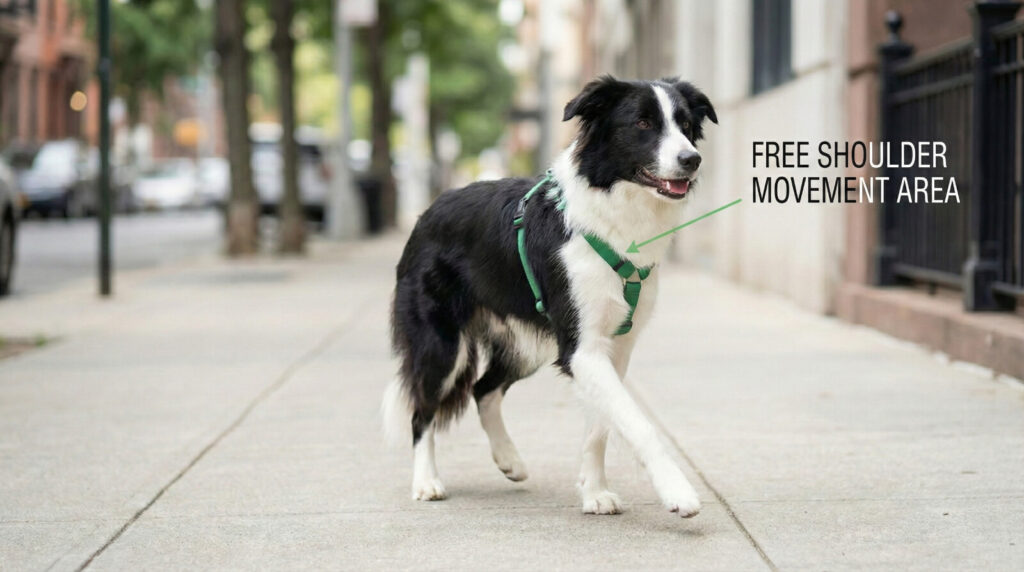
The Solution: The Y-Shape Design For an everyday walking harness, the best choice is the Y-Harness. This structure looks like a ‘Y’ when you look at your dog from the front.
- Freedom of Movement: When a dog walks or runs, their shoulder blades slide back and forth. A proper Y-harness has neck straps that sit above the shoulder joints. They do not sit across them. This lets the front legs extend fully. nothing gets in the way.
- Protecting the Throat: The center of the ‘Y’ should sit on the breastbone. This is a strong bone. If the dog pulls, the pressure spreads across the chest and shoulders. It does not strangle the soft tissue of the throat.
2. The “Armpit Test”: Preventing Chafing
You see this complaint in reviews all the time. “The size fits, but he won’t walk.” Or maybe, “I saw red marks under his legs after a week.”
This is almost always a design fail. It is about where the Girth Strap sits. That is the strap that goes around the ribs.
What to Look For:
- Clearance Zone: The strap behind the front legs should not sit right up against the armpit. You need a gap. Look for about two to three fingers’ width between the front leg and the strap. If the buckle sits too close to the elbow, it will bang against the leg. It will rub the sensitive skin with every step.
- 4-Point Adjustment: Dogs are not perfect cylinders. A good harness must have adjustable sliders on both the neck straps and the chest straps. Fixed neck openings are a major cause of escapes. If you cannot make the neck fit snug, a dog can back out of the harness easily.
3. Hardware: The Safety Foundation
Your gear is only as strong as the weakest part. In many cheap options, this weak spot is the metal ring or the plastic buckle.
Key Specifications:
- Welded D-Rings: Check the metal ring where you clip the leash. Is it an “Open Ring”? That means it is just bent wire with a visible gap. Or is it a “Welded Ring”? That is a solid loop. In a sudden lunge, an open ring can bend and pull apart. Always look for welded hardware for safety.
- Buckle Quality: For medium to large dogs, the sound of the click matters. Good brands use tough plastic, like POM. It stays strong even when it freezes. It handles stress well. Cheap plastic gets brittle. It can snap when pulled tight.
4. Scenario Mapping: Function Over Fashion
Where you walk changes what you need. A flexible everyday harness usually has these tools to handle different spots:
- The Traffic Handle: If you walk on city streets, look for a sturdy handle on the back of the harness. This lets you grab your dog quickly. It helps at crosswalks or if an angry dog gets too close. You don’t need to wrap the leash around your hand.
- The Front Clip (No-Pull Ring): Does your dog pull? For dogs still learning to walk nicely, a front chest attachment point is key. This is physics, not magic. When the leash is clipped to the front and the dog pulls forward, it turns their body back toward you. It uses their own force to slow them down. It makes it harder for them to drag you, without hurting them.
Summary: A Rational Checklist
Before you buy, pause. Forget the colors for a second. Check these four things:
- Structure: Is it a Y-shape? Does it leave the shoulders free?
- Distance: Does the design keep the buckles away from the armpits?
- Hardware: Are the D-rings welded and seamless?
- Control: Does it have a front clip for training and a back handle for safety?
The point of a good harness isn’t to trap your dog. It is to keep them safe. They shouldn’t even feel like they are wearing it.
Frequently Asked Questions
Q: How tight should the harness actually be?
A: Use the “Two-Finger Rule.” You should be able to slide two fingers flat between the strap and your dog’s body. If you can’t get them in, it is too tight. If you can lift the strap way up or the harness slides sideways a lot, it is too loose. It needs to be snug to work, but it should not squeeze them.
Q: Can I leave the harness on my dog all day inside the house?
A: It is better to take it off. Even the softest harness can rub the skin or tangle the fur if worn. It is also a safety risk. A bored dog might chew through the chest strap, or the D-ring could get snagged on a crate or furniture while they sleep. Save the gear for walk time.
Q: My dog is an “escape artist” and backs out of harnesses. Will a Y-Harness fix this?
A: It helps, but the fit must be perfect. Most escapes happen because the neck straps are too loose. If the head can fit through, the dog can back out. If you have a true escape artist (like a Greyhound or a scared rescue dog), look for a specialized “safety harness.” These usually add a third strap that goes around the tuck of the waist. This makes backing out physically impossible.
Would you like me to create a specific “Size Measurement Guide” based on the Y-harness structure mentioned above to help your customers measure their dogs correctly?