E-mail Us at info@wingtupet.com
Call Us at Wingtu Pet | Whatsapp +1- 626 734 5510

Get A Quote
I. Introduction: Exploring the World with Your Best Friend—Is Your Gear Truly Ready?
In recent years, the landscape of pet ownership has undergone a silent but profound revolution. Dogs are no longer merely “backyard companions”; they have transitioned into full-fledged family members who participate in every life adventure. From the meteoric rise of pet-friendly travel and the “Van Life” movement to weekend RV camping and cross-country road journeys, the world is opening its doors to four-legged explorers like never before.
However, as our lifestyles evolve toward greater mobility with our pets, a critical question emerges: Is our equipment keeping pace with our ambitions?
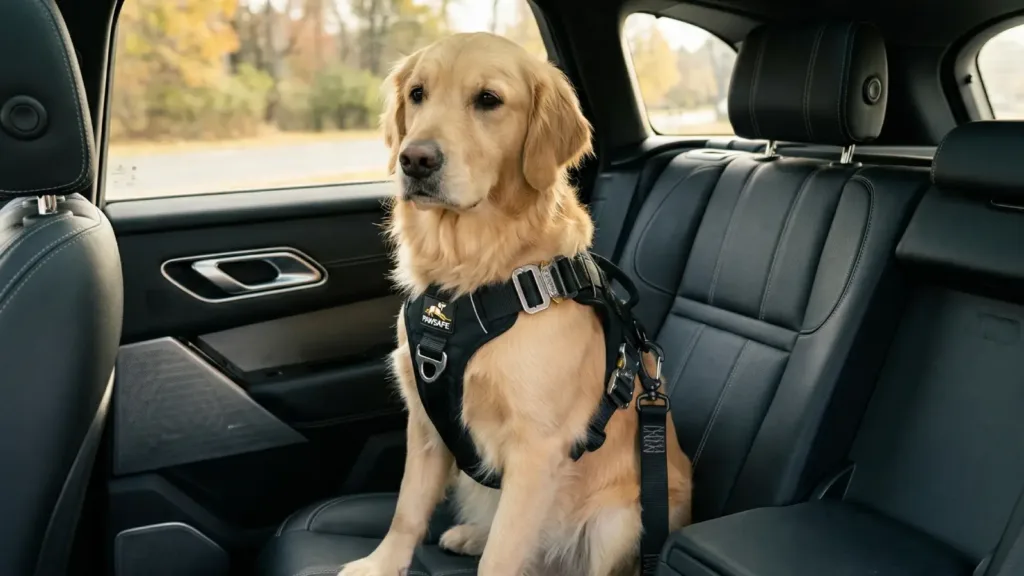
While the modern traveler wouldn’t dream of driving without a seatbelt, a startling number of pet owners still allow their dogs to roam freely in the vehicle or rely on standard walking harnesses as a form of restraint. This is a dangerous oversight. In the event of sudden braking or a high-impact collision, an unrestrained dog becomes a deadly projectile, posing a fatal risk to themselves and every human occupant in the car.
The “humanization of pets” trend requires more than just affection; it demands professional-grade safety. According to recent market data from top-performing e-commerce segments, modern pet travel gear is undergoing a dual evolution. Consumers are no longer satisfied with basic leashes; they are seeking multifunctional integration for outdoor versatility and rigorous crash-tested certification for highway security. This guide will navigate you through the shift from basic restraint to high-performance protection, ensuring your next adventure is as safe as it is memorable.
II. Trend One: From “Traction” to “Integration”—The Tactical Surge
1. Market Data Insights: Why Tactical Designs Dominate the Charts
Recent analysis of the Amazon Top 50 best-selling pet ASINs reveals a clear shift in consumer preference. Tactical and heavy-duty harnesses are currently outperforming foundational models by a significant margin.
| Harness Category | Market Share | Avg. Monthly Sales per ASIN | Efficiency Multiplier |
| No-Pull / Standard Vest | 30.7% | 470 | Baseline |
| Tactical / Heavy-Duty | 27.4% | 2,940 | 6.3x |
| Y-Shaped Ergonomic | 9.3% | 1,491 | 3.2x |
| Step-In / Basic | 8.1% | 370 | 0.8x |
Key Insight: While tactical models hold a slightly smaller total market share than standard vests, they achieve this with a fraction of the product listings. The average tactical ASIN sells 4.6 times more than the market average. This is not merely a “rugged aesthetic” trend; it is a direct response to the demand for durability and control among owners of medium-to-large breeds.
In terms of construction, standard synthetic fibers (Nylon) maintain a 90.8% market dominance. This material is preferred for its high strength-to-weight ratio, abrasion resistance, and cost-effectiveness, making it the ideal choice for both intense outdoor excursions and long-term vehicle use.
2. Functional Analysis: The MOLLE System and the “Mobile Supply Station”
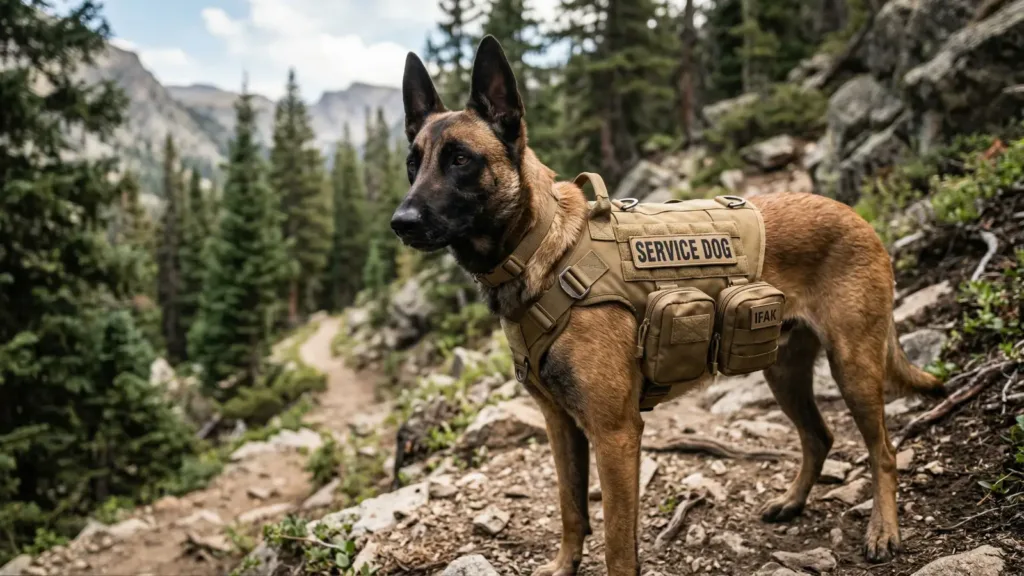
The core appeal of the tactical version lies in its adaptation of the MOLLE system (Modular Lightweight Load-carrying Equipment). Originally developed for military use, this system utilizes a grid of webbing that allows for the attachment of various modular pouches.
For the pet owner, this transforms the harness into a “mobile supply station.” Leading products, such as those from Dogline or the high-volume WINGOIN Tactical Harness, utilize this system to provide:
- Detachable Side Bags: For carrying waste bags, treats, or collapsible bowls, effectively “offloading” the owner’s pockets.
- First Aid Attachments: Crucial for remote hiking where immediate medical assistance is unavailable.
- Identification Panels: Velcro areas for service dog patches or behavioral warnings (e.g., “In Training” or “Do Not Pet”).
This level of integration empowers the dog to participate in the journey’s logistics, making long-distance trekking more organized and hands-free for the human.
III. Trend Two: Hardcore Safety—Why “Crash-Tested” Is Non-Negotiable
1. Global Standards: Navigating the Regulatory Landscape
As pet travel becomes a global phenomenon, international regulatory bodies are tightening the screws. In the European Union, particularly in Germany, the standards for pet transportation safety are among the highest in the world. Similarly, aviation standards for pet transport have evolved, requiring higher structural benchmarks for any equipment used in transit.
It is vital for consumers to understand the distinction between marketing jargon and engineering reality. Many products are labeled as “car-safe,” but few have undergone dynamic testing. A static pull test (which measures the force required to snap a harness) does not account for the violent, multi-directional kinetic energy generated during a vehicle impact. Only a dynamic crash test can truly certify a product’s life-saving capabilities.
2. Engineering Excellence: The Philosophy of Sleepypod and Kurgo
To understand true safety, we must look at the pioneers who treat pet safety with the same gravity as automotive safety.
- Sleepypod (Clickit Series): Sleepypod utilizes a three-point contact design inspired by human seatbelts. Their products are tested at independent facilities using the same crash-test dummies and high-speed photography used by the car industry. Their primary engineering goal is to minimize the excursion distance—the distance the dog is thrown forward—to prevent the pet from striking the front seats or the dashboard.
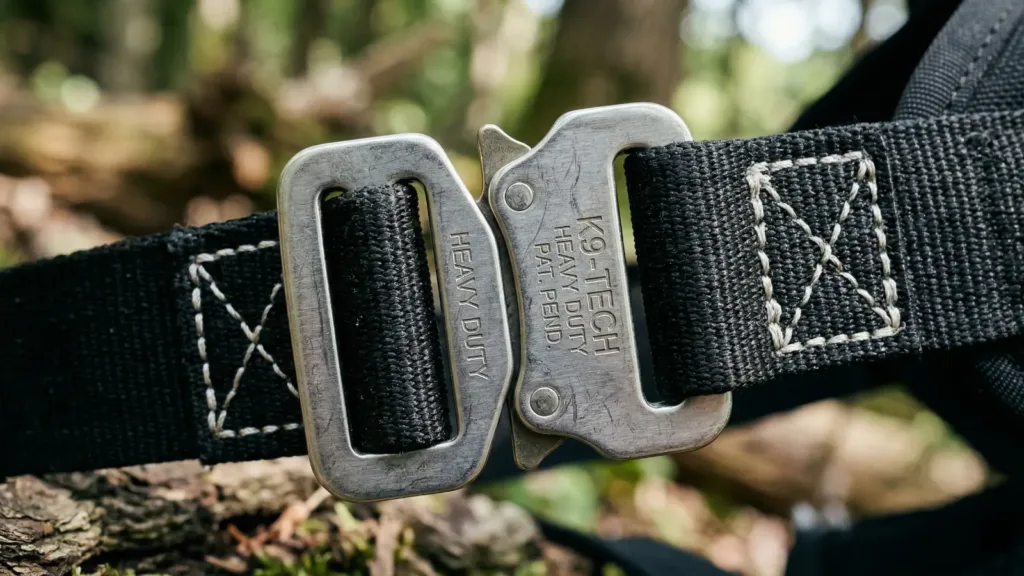
- Kurgo (Impact Series): Kurgo focuses on a “strength-rated” hardware system. Their Impact harness features a single-loop design and all-steel nested buckles that can withstand forces exceeding 2,500 pounds, simulating the stresses of a 30-mph collision.
These brands provide transparent access to their testing videos, often certified by the Center for Pet Safety (CPS), a third-party non-profit that sets the “gold standard” for pet travel safety.
3. A Buyer’s Checklist: Identifying Genuine Safety Gear
When shopping for a travel harness, you must look past the “heavy-duty” label. Use this verification framework:
| Verification Point | Pass Standard | Red Flag / Warning |
| Testing Evidence | Brand provides public crash-test footage. | Only static images or 3D renders are shown. |
| Certification | CPS or independent third-party lab results. | Only “self-certified” or vague “tested” claims. |
| Hardware Material | All-metal, steel-nested, or aluminum buckles. | Plastic “quick-release” buckles (prone to shattering). |
| Webbing Grade | Seatbelt-grade nylon with reinforced stitching. | Thin, single-layer polyester or basic nylon. |
True crash-tested gear typically sits in the $30–$40+ price range. This reflects the high cost of engineering, specialized materials, and the thousands of dollars required for each round of independent laboratory testing.
IV. Scenario Segmentation: Heavy-Duty Travel vs. Daily Light-Walking
One of the most common mistakes a pet owner can make is seeking a “universal” harness. Professional pet care requires the understanding that different activities require different tools.
1. The Balancing Act: Safety vs. Weight
A genuine crash-tested car safety harness is, by definition, a heavy piece of equipment. To survive the G-forces of an accident, it requires thick webbing and heavy metal hardware. While this rigidity is life-saving in a car, it can be a drawback for daily exercise.
A heavy-duty safety vest worn during a two-hour hike in the summer sun can lead to overheating or chafing in the armpits. It is simply too “over-engineered” for a casual walk.
2. The “Two-Gear” Strategy for Modern Owners
We recommend that every active pet owner adopt a “dual-gear” philosophy based on the specific scenario:
- For the Road (The Heavy Hitter): Use a heavy-duty, crash-rated harness. These are designed to distribute the sudden force of a stop across the dog’s strongest skeletal points—the chest and ribcage—protecting the spine and the delicate trachea.
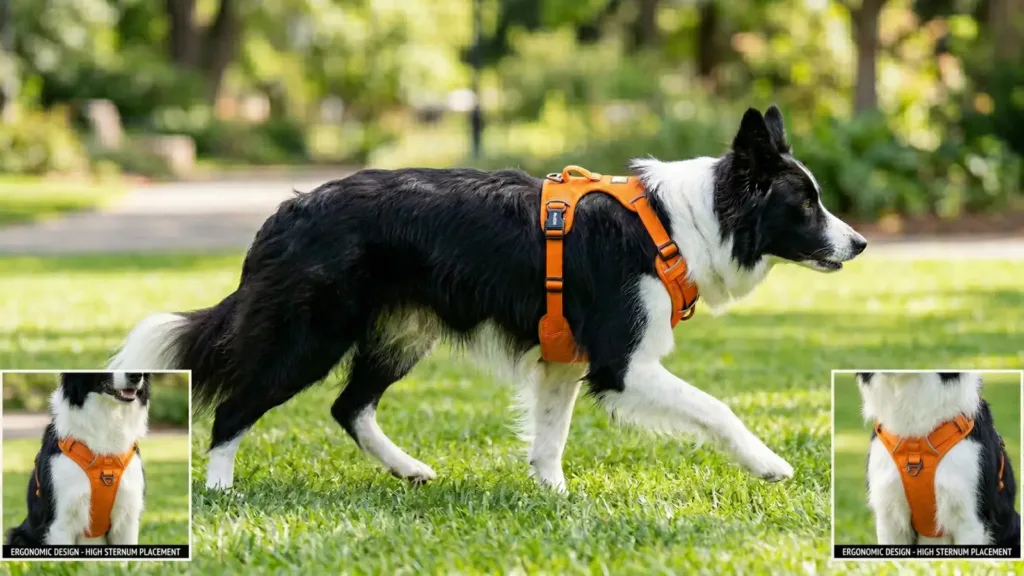
- For the Destination (The Ergonomic Walker): Once you arrive, switch to an ergonomic Y-shaped harness or H-shaped harness.
The Science of the Y-Shape: Unlike traditional “no-pull” harnesses that wrap across the front of the shoulders (restricting the dog’s natural gait and potentially causing long-term joint issues), a Y-shaped harness leaves the shoulder blades free to move. This design is essential for loose-leash walking and ensures that any tension on the leash is directed away from the neck and throat, preventing tracheal collapse. While Y-shaped harnesses represent only 9.3% of the total market, their high sales efficiency (1,491 units/ASIN) proves that health-conscious owners are actively seeking this specific ergonomic benefit.
V. Consumer Education: The Decision Framework for Smart Investment
In a market saturated with cheap alternatives, “value” is often misunderstood. In the realm of safety, you are not just buying a product; you are buying an insurance policy for your pet’s life.
1. Understanding Price Points: Why $40 is a Bargain
Our market analysis shows that professional-grade harnesses often carry a $15–$30 premium over basic models. To the uninformed, this seems steep. However, consider the manufacturer’s “hidden” costs:
- R&D Excellence: It takes months of engineering to design a buckle that doesn’t fail under 3,000 lbs of pressure.
- The Cost of Failure: Independent crash tests are expensive. Every “failed” prototype is a loss that leads to a safer final product.
- Premium Raw Materials: Using seatbelt-grade webbing and aerospace-grade aluminum is significantly more costly than the generic materials used in $10 harnesses.
2. Spotting the “Fake Tactical” Trap
Owners must be wary of “tactical-style” gear that mimics the look of professional equipment without the performance. Many “fake tactical” harnesses feature:
- Plastic Buckles: Often painted to look like metal.
- Low-Density Nylon: That frays or stretches after a few weeks of use.
- Non-Functional MOLLE: Webbing that is not stitched to standard intervals, making it impossible to securely attach gear.
If a harness feels light and “flimsy” despite its rugged appearance, it is likely a fashion piece rather than a safety tool. Always prioritize mechanical integrity over visual style.
VI. Blue Ocean Opportunities: Where the Market is Heading
For those following the industry, two significant “Blue Ocean” gaps have emerged in the data:
1. The Customization Gap: Personalized Safety
Market data shows that ASINs offering custom embroidery (names and phone numbers) achieve average monthly sales of 2,837 units—6.2 times higher than plain models. Owners are willing to pay a premium for “exclusivity” and the added security of having their contact information permanently stitched onto the harness in case of an emergency.
2. The Health-First Narrative
As pet owners become more educated about canine anatomy, the demand for trachea protection and shoulder-free movement is growing. New brands that successfully combine “Tactical Utility” with “Y-Shaped Ergonomics” are finding a highly receptive, high-paying audience. This intersection of “Safety” and “Health” is the next frontier of pet gear.
VII. Conclusion: A Commitment to Every Journey
Traveling with your dog is one of life’s most rewarding experiences. It deepens the bond between species and turns a simple drive into a shared adventure. But this joy comes with a profound responsibility.
By embracing the dual concepts of multifunctional integration and hardcore vehicle safety, you are moving beyond the role of a “pet owner” to become a “pet guardian.”
Remember the “Two-Gear” Philosophy:
- On the Road: Rely on a heavy-duty, crash-tested certified harness to ensure everyone reaches the destination safely.
- On the Trail: Switch to a lightweight, ergonomic Y-shaped harness to let your dog explore with maximum comfort and freedom.
Investing in high-quality gear is an investment in your dog’s future adventures. Don’t wait for a “close call” to realize your equipment is insufficient. Upgrade your gear, adhere to the highest safety standards, and prepare for a lifetime of worry-free exploration.