E-mail Us at info@wingtupet.com
Call Us at Wingtu Pet | Whatsapp +1- 626 734 5510

Get A Quote
Walking your dog ought to be the best part of your day. It should not feel like a test of your arm strength. Maybe you feel like you are water-skiing on the road when your dog sees a squirrel. If so, you are not alone.
Many dog owners have this same trouble. A common question comes up: is a harness better than a collar? If you have a dog that pulls hard, the answer is yes. A collar presses on the windpipe. That can be dangerous. A harness is different. It spreads that pull across the chest instead.
But not all harnesses do the same job. This is where the H-Type No-Pull Harness comes in. It is made to give you control. At the same time, it lets your dog move freely.
The Design Logic: Why the “H” Shape Matters
You might see lots of harnesses at the store. But the shape is the most important part.
Some harnesses have a strap that goes straight across the chest. These are easy to put on. However, they often block your dog’s shoulders. Think about trying to run with a belt tied tight around your arms. It would change how you move.
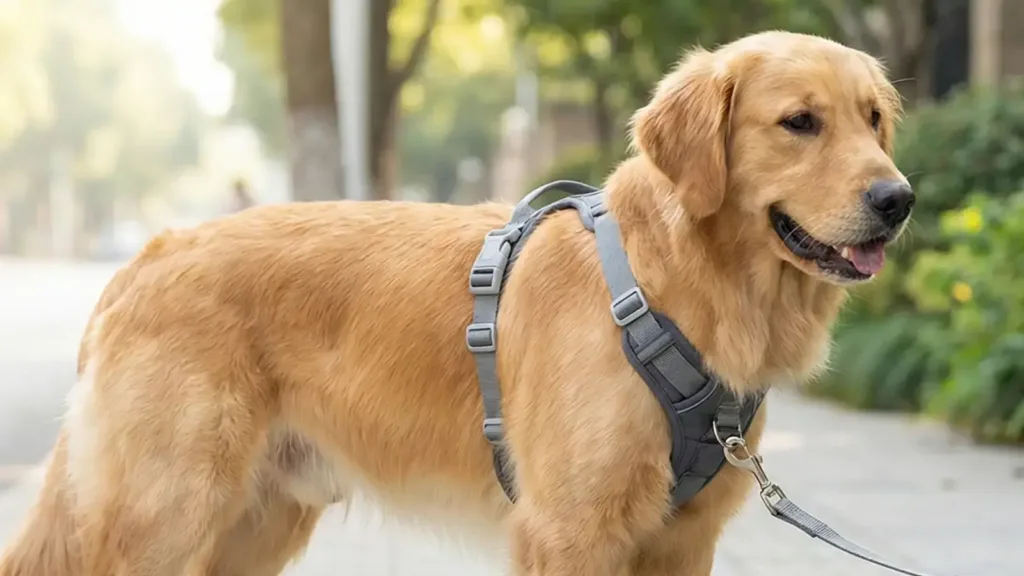
The H-Type No-Pull Harness works differently. It has a shape that goes around the neck and the ribs. Straps on the back and belly connect these parts. It makes a Y-shape in the front. From the top, it looks like an H.
- Free Shoulders: The neck straps sit high up. Your dog can move its front legs all the way. Nothing blocks them.
- Safe Fit: It wraps around the body securely. It is very hard for a dog to wiggle out of this. It is much safer than simple step-in styles.
The Physics of “No-Pull”
How does a simple strap stop a 70-pound dog? It does not use magic. It uses basic science.
Most H-Type harnesses have two spots to clip a leash:
- The Back Clip: This is for easy, calm walks.
- The Front Clip: This is on the center of the chest.
When you clip the leash to the front, you change the leverage. If your dog runs forward, the leash pulls them to the side. It turns their body toward you. This stops their forward motion. They basically pull themselves into a turn. It turns pulling into turning.
This is very helpful if you need a no pull dog harness for large dogs. It lets a smaller person walk a big animal safely.
How to Measure Dog for Harness Success
The best gear won’t work if the fit is wrong. A loose harness rubs the skin. A tight one hurts.
Grab a tape measure before you buy one. Do not just guess based on weight.
- Measure the Body: Put the tape around the biggest part of the ribs. This is usually right behind the front legs.
- Measure the Neck: Measure where a collar usually sits. But go a little lower, near the bottom of the neck.
How should a dog harness fit? Put it on your dog. Then, use the “Two-Finger Rule.” You should be able to slide two fingers under any strap.
- Check the Armpits: Make sure the belly strap is far enough back. It should not rub the skin behind the front legs when the dog walks.
- Check the Center: The front piece should sit on the chest bone. It should not slide up to the throat.
Real-Life Usage: From Training to Commuting
Scenario A: The Training Phase You are walking on a busy street. Your dog is very excited.
- What to do: Use the Front Clip.
- The Result: You have control. If the dog tries to say hi to everyone, you can gently guide them back to you.
Scenario B: The Weekend Hike You are on a trail. You have a long leash.
- What to do: Switch to the Back Clip.
- The Result: Your dog has freedom. They can sniff and explore. The leash won’t get tangled under their legs.
A Note on Patience
An H-Type No-Pull Harness is a great tool. But it is not a remote control. It helps manage the pulling. This gives you a chance to give treats when your dog walks nicely.
Choose a harness that fits your dog’s body well. Protect their throat. Keep their shoulders free. This sets you up for a walk that is safe and fun for both of you.