E-mail Us at [email protected]
Call Us at Wingtu Pet | Whatsapp +1- 626 734 5510

Get A Quote
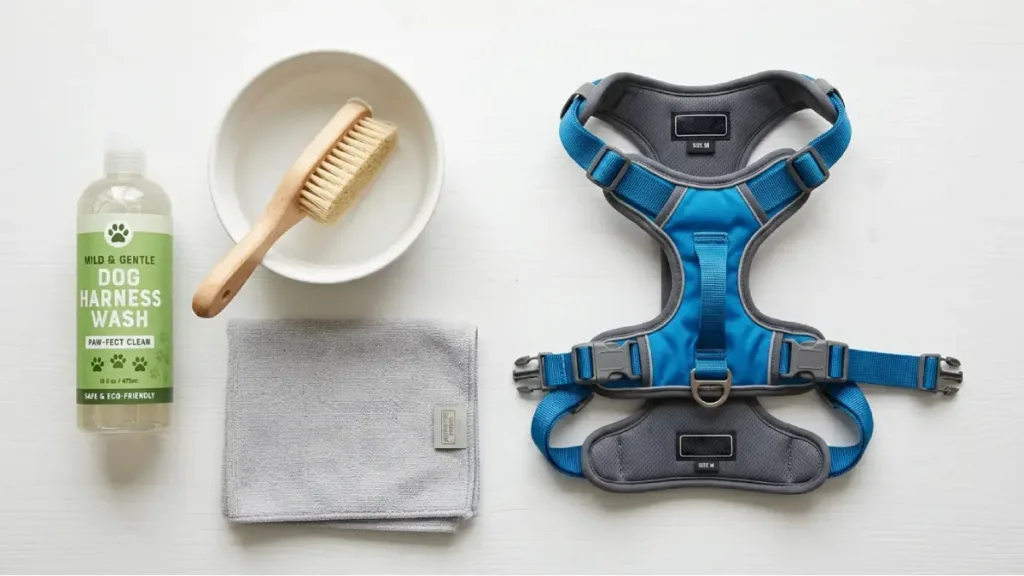
Your Harness Is Probably Filthier Than You Think
A dog harness used every day can accumulate as much bacteria in two weeks as a toilet seat. That’s not an exaggeration — a 2023 study in Veterinary Dermatology found that regularly used pet harnesses harbor Staphylococcus aureus and Malassezia, both common culprits behind recurring skin infections in dogs.
I own two dogs and walk them at least ten times a week. I learned this lesson the hard way — my French Bulldog kept getting eczema in his armpits. Tried different creams, changed his diet, nothing worked. Finally figured out the cause was the nylon harness I’d never once washed. Since then, cleaning the harness has been a non-negotiable part of my post-walk routine.
Cleaning Methods by Material
Nylon Harnesses — Most Common, Easiest to Clean
Nylon is the most widely used harness material — durable and easy to clean. Hand washing is better than machine washing because the machine’s agitation wears down the nylon webbing edges and shortens the harness lifespan.
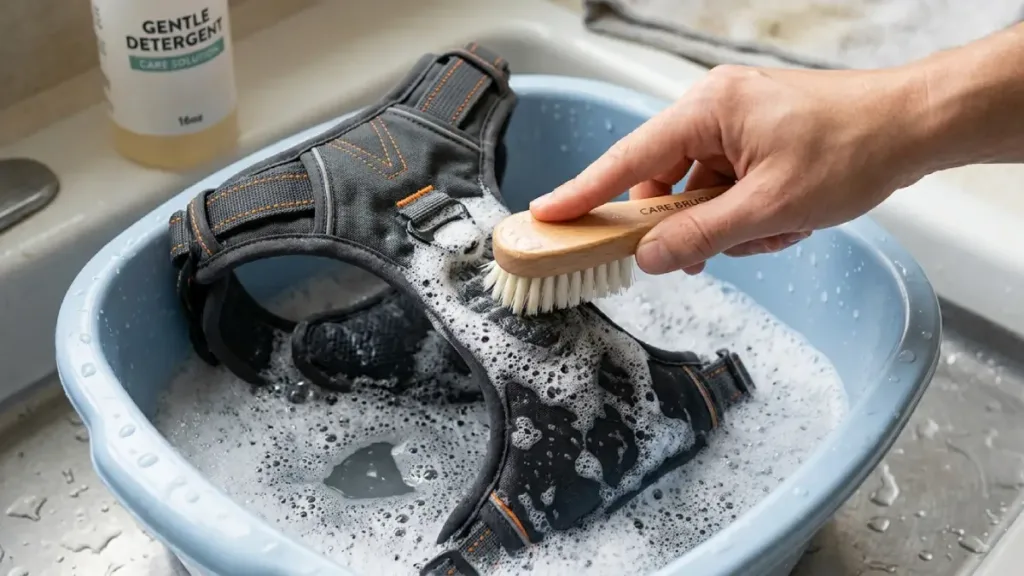
Hand wash steps:
- Mix warm water (no hotter than 40°C) with a small amount of mild detergent
- Soak for 10-15 minutes to loosen dirt
- Scrub key areas with a soft brush — the neck contact zone, armpit area, and around the buckles
- Rinse thoroughly until no suds remain
- Squeeze out water (don’t wring), then roll in a dry towel to absorb moisture
- Air dry away from direct sunlight
Important: Don’t use bleach or fabric softener. Bleach weakens nylon fibers, and fabric softener leaves a coating on the webbing that can make buckles slip.
Neoprene Harnesses — Handle With Care
Neoprene is common in padded harness sections. It’s absorbent, slow to dry, and prone to mold if cleaned wrong.
Key points:
- Cold water hand wash only — hot water deforms neoprene
- Use neutral detergent, nothing with alcohol or solvents
- Press with a towel to absorb water — don’t wring
- Dry flat in a ventilated area, no machine drying
- Allow 24-48 hours for complete drying
Leather Harnesses — The Most Delicate
Leather harnesses need the same care as your leather shoes. Leather doesn’t handle water well — frequent wet cleaning makes it stiff and cracked.
Care routine:
- Wipe with a dry cloth after each use for daily maintenance
- Apply leather conditioner (mink oil or saddle soap) every 2-3 months
- If it gets wet, blot with a dry cloth and air dry in the shade
- Never machine wash, soak, or use any detergent
Mesh/Breathable Harnesses — Needs Extra Rinsing
Mesh material (common in escape-proof and ventilated styles) has a complex structure that traps dirt in the webbing.
Cleaning tips:
- Dry brush first to remove surface mud and hair
- Soak in diluted detergent solution for 5 minutes
- Scrub mesh areas with a toothbrush — this is where bacteria hide deepest
- Rinse extra thoroughly to get all detergent out
- Fluff the mesh by patting before drying
Recommended Cleaning Frequency
| Use Case | Frequency |
|---|---|
| Daily walks | Every 2-3 weeks |
| Rain or mud exposure | Clean immediately |
| Beach or sand exposure | Rinse with fresh water after each use |
| Multi-dog household sharing | Weekly |
| Dogs with sensitive skin | Weekly plus disinfection |
Deep Cleaning vs. Quick Cleaning: When to Do What
Not every harness needs a full wash every time. In fact, overwashing can shorten a harness’s lifespan just as much as underwashing. The trick is knowing the difference between a quick maintenance clean and a deep clean.
Quick cleaning (after every muddy or wet walk): Rinse the harness with cool water to remove surface mud, sand, and salt. Pat dry with a towel and hang to dry. This takes two minutes and prevents most of the damage that dirt causes. I do this after every walk that involves rain, puddles, or beach sand.
Spot cleaning (weekly or when you see localized dirt): Mix a small amount of mild detergent with water. Dip a soft cloth in the solution and gently rub the dirty areas — usually the chest contact point, the armpit straps, and around the buckle area. Wipe with a clean damp cloth afterward. This keeps the harness presentable without a full wash cycle.
Deep cleaning (every 2-3 weeks for daily use): This is the full hand-wash routine described in each material section. Soak, scrub, rinse thoroughly, and dry completely. A deep clean removes embedded oils, bacteria, and odor that accumulate over time.
The “Smell Test” Rule
Here’s a simple rule I use: if the harness smells bad after it’s fully dry, it needs a deep clean. Dry harnesses shouldn’t smell like anything but clean fabric. A lingering odor means bacteria have colonized the material, and a surface rinse won’t fix it. At that point, a full deep clean with detergent and thorough drying is the only solution.
Drying — More Important Than Washing
Most harnesses get ruined by improper drying, not washing. Damp conditions are perfect for bacteria and mold growth. A harness left damp can develop a musty smell within 24 hours.
Proper drying method:
- Air drying is best — hang in a ventilated spot out of direct sun
- Roll the harness in a dry towel and press to absorb water — this cuts drying time in half
- Don’t use a dryer, radiator, or hair dryer — heat damages webbing and elastic parts
- Make sure buckle crevices are bone dry too — trapped moisture is what causes rust
When to Replace Your Harness
Even with perfect care, harnesses don’t last forever. Replace yours if you spot any of these signs:
- Fraying or fuzzy webbing edges — strength has dropped, could snap under pressure
- Loose or broken stitching — stress-point stitching is critical and can’t be repaired
- Rusty or bent hardware — corroded buckles can fail during a walk
- Velcro no longer holds — worn hook-and-loop can’t secure reliably
- Smell that won’t go away — even after thorough cleaning, bacteria have penetrated the material
- Elastic has lost its stretch — harness feels loose, dog could slip out
For daily-use harnesses, plan to replace every 12-18 months. If your dog chews on the harness or you walk in rough weather often, shorten that to 6-9 months.
Loving this guide? Wingtupet manufactures premium harnesses for pet brands worldwide, with every product tested for durability. If you’re building a pet product line, reach out for a custom quote.
Appendix: Harness Care Schedule (Quick Reference)
To make things easy, here’s a printable summary of the care schedule:
- After every walk in rain/snow/mud: Rinse with cool water, towel dry, hang to dry.
- Weekly: Spot clean with damp cloth. Check for wear, loose stitching, rust spots.
- Every 2-3 weeks: Full hand wash following material-specific instructions above.
- Monthly: Deep condition leather harnesses. Check buckle and D-ring integrity.
- Every 6 months: Replace if showing signs of wear. If not, do a deep clean and treat any metal hardware with a light corrosion inhibitor.
- Every 12-18 months: Replace regardless of visible condition (for daily-use harnesses).
Print this and stick it on your laundry room wall. Your dog’s harness will last longer, smell better, and stay safer.
Preventing Odor Between Washes
Some harnesses seem to smell bad no matter how often you wash them. If that’s happening, the issue might not be the washing frequency — it might be how you store the harness between uses.
- Don’t leave a damp harness in your car or gym bag. Heat and darkness create the perfect environment for bacteria to multiply. A harness left in a car trunk after a wet hike will smell sour within hours.
- Hang it up after every walk. Make it a habit: come home, take off the harness, hang it on a hook near the door. Air circulation is the cheapest odor prevention method there is.
- Use a boot dryer for quick turnaround. If you walk multiple times a day in wet conditions, a boot dryer set on low heat can dry a harness in 2-3 hours. Don’t use high heat — that damages webbing.
- Baking soda treatment for stubborn odors. Sprinkle dry baking soda on the harness, let it sit for 30 minutes, then brush it off before your regular wash. This neutralizes odor-causing acids without adding chemicals.
- Sunlight is a natural deodorizer. When weather permits, hang the harness outside in indirect sunlight for an hour. UV light kills many odor-causing bacteria naturally. Just don’t leave it out for too long — prolonged UV exposure degrades nylon and neoprene.