E-mail Us at info@wingtupet.com
Call Us at Wingtu Pet | Whatsapp +1- 626 734 5510

Get A Quote
What the Handle Is Really For—and When It Actually Helps
Start with the real situation, not the feature
Most dog owners don’t start looking for a harness with a handle because it looks “tactical.”
They notice it after very specific moments:
A dog hesitates at the curb while traffic keeps moving.
An elevator door starts to close and there’s no time to shorten the leash.
A trail narrows, footing becomes unstable, and guidance needs to be immediate.
In these situations, a leash alone is often too indirect. What’s needed is short-range, momentary guidance. That is the real purpose of a handle.
Not control. Not restraint. Assistance.
What the market already gets right (Parity)
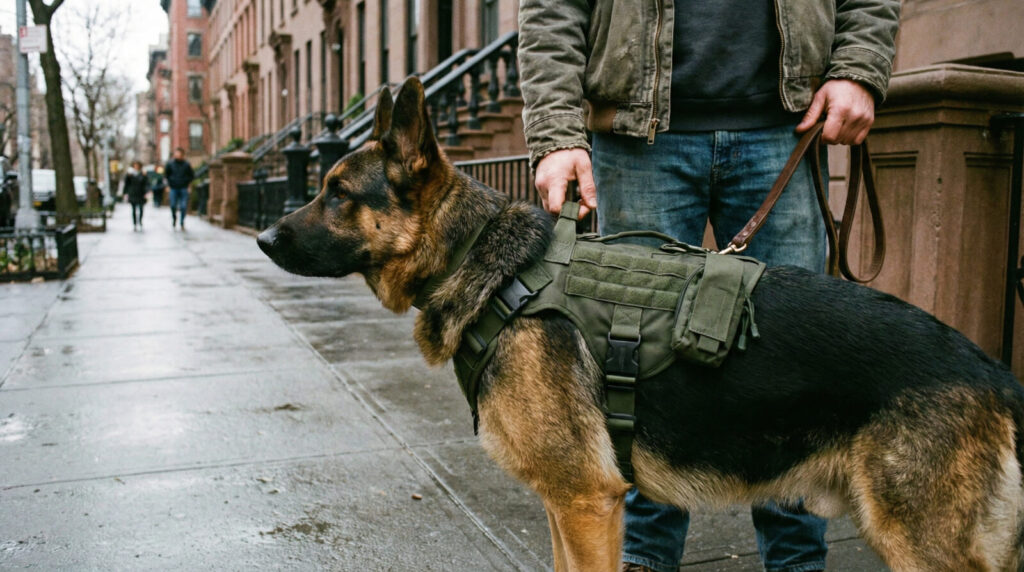
Most tactical harnesses with handles share a few common traits:
They are built with thicker webbing and reinforced stitching.
They offer multiple adjustment points to fit different body shapes.
They place a grab handle on the top panel for quick access.
These features are well understood and expected. The problem is not their presence, but how they are executed and used.
Where problems usually appear (Gaps)
Handle placement is the most common issue.
When the handle sits too far back on the spine, lifting force shifts toward the mid-back. This encourages vertical pulling rather than forward guidance, which can feel unnatural for the dog.
Overly rigid handles are another issue.
Some handles are designed to look rugged rather than feel usable. Stiff edges, minimal padding, or overly tight loops can make quick intervention awkward—especially with gloves or in cold weather.
Misunderstanding the handle’s role causes most dissatisfaction.
A handle is not meant for sustained lifting or dragging.
What actually makes a good handle harness work
From a structural and functional standpoint, effective designs share a few traits:
The handle sits just behind the shoulder blades, closer to the dog’s center of mass.
This allows the handler to guide direction and stabilize movement, rather than lifting upward.
The handle has enough thickness or internal padding to allow a natural grip.
You should be able to grab it without clenching hard or adjusting your hand position.
The harness body distributes force across the chest and shoulders.
When brief pressure is applied through the handle, the load is shared, not concentrated.
Real-world scenarios where a handle earns its place
Urban daily walking
Handles are most useful for brief pauses—curbs, crossings, crowded sidewalks—not for continuous control.
Outdoor activities and hiking
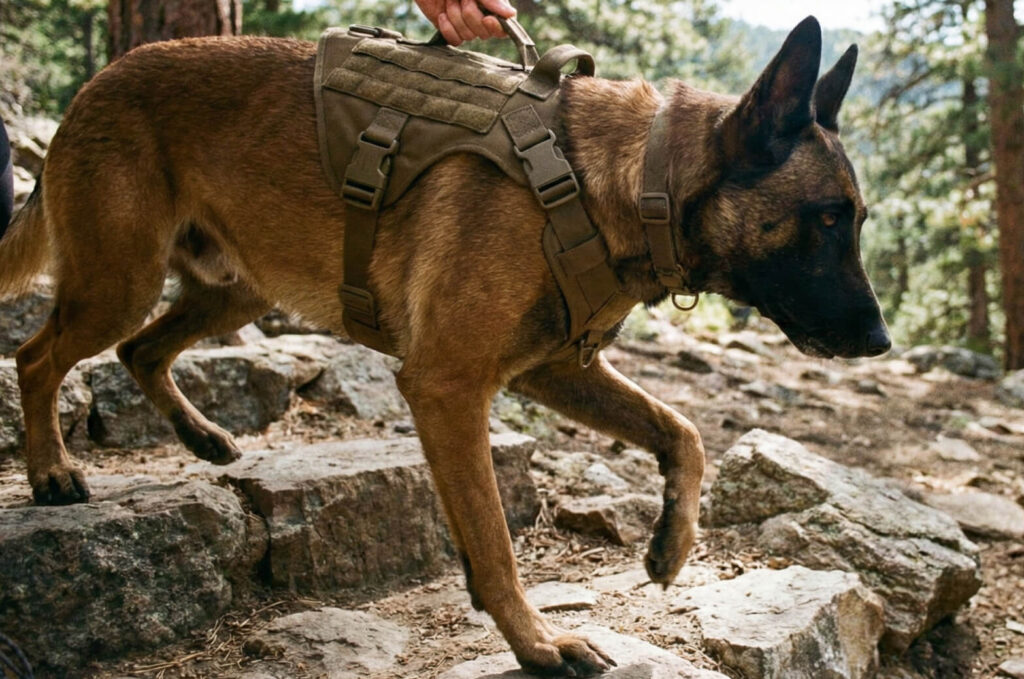
When stepping over roots, rocks, or uneven ground, the handle provides balance assistance and clear physical signals.
Training and acclimation phases
For dogs still learning environmental boundaries, a handle acts as a safety backup rather than a primary cue.
Practical buying and use advice
If your dog is small and your walking environments are predictable, a handle may offer little added value.
For medium to large dogs navigating complex spaces, a well-designed handle increases safety margins.
The right question is not “Can I control my dog with this?”
It is: “When I intervene, does my dog remain balanced and comfortable?”
A final note worth remembering
The best tactical dog harness with a handle is one you rarely need to grab.
Its success isn’t measured by how powerful it feels, but by how quietly it supports those few critical seconds when guidance matters most.