E-mail Us at info@wingtupet.com
Call Us at Wingtu Pet | Whatsapp +1- 626 734 5510

Get A Quote
The Moment That Changed Everything
I used to recommend H-style harnesses without hesitation. Then I reviewed slow-motion footage of a Border Collie in full extension—and watched her shoulder blade catch on a chest strap. One frame. One dog. And everything I thought I knew about harness selection shifted.
This article isn’t about which harness looks sturdiest or controls pulling best. It’s about whether your dog’s skeleton can move as evolution designed it to.
Why Your Dog’s Shoulder Blades Need Freedom
The Anatomy Most Owners Overlook
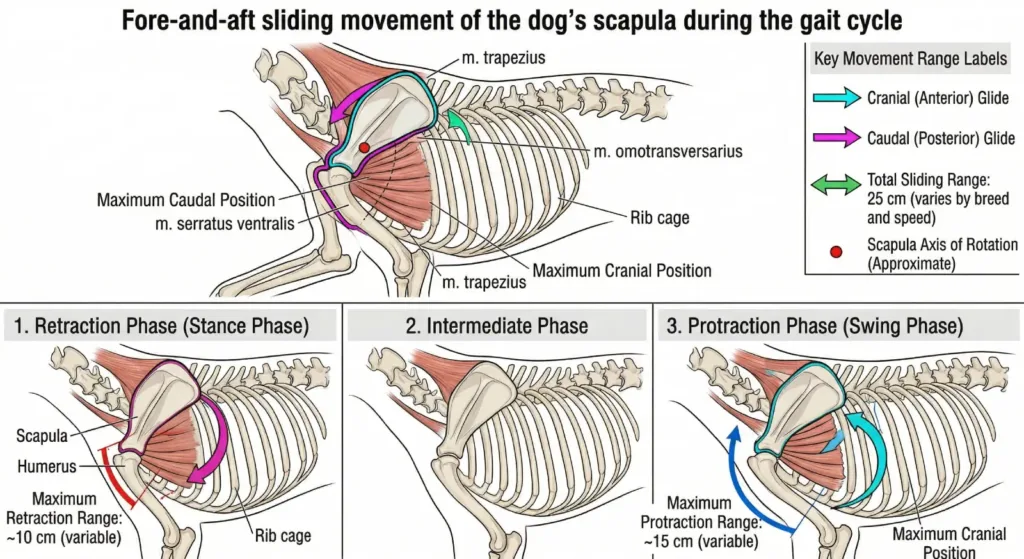
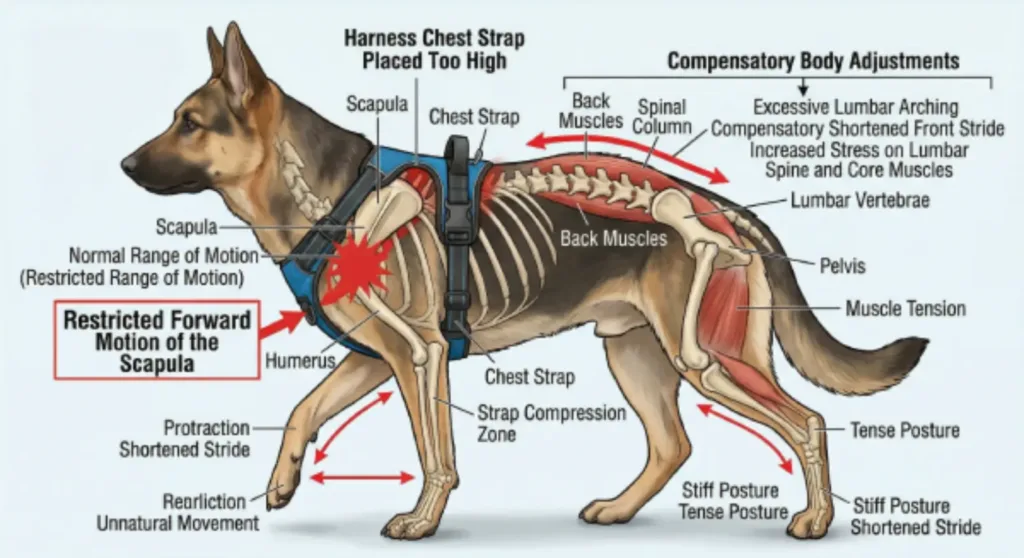
Your dog’s scapulae (shoulder blades) aren’t fixed to the ribcage like human shoulders. They’re muscularly suspended at the top of the front legs, functioning as shock absorbers and propulsors with every stride.
During normal walking, each scapula must:
- Glide forward 2–3 inches during leg extension
- Rotate to accommodate terrain changes
- Slide back as the paw pushes off
Restrict this motion, and you’re not causing temporary discomfort. You’re altering joint loading patterns that lead to chronic shoulder strain, compensatory neck tension, and early arthritis.
“I see more shoulder issues from ill-fitting harnesses than from actual sports injuries in companion dogs.” — Canine sports therapist, Portland
H-Harness vs Norwegian: A Side-by-Side Biomechanical Breakdown
The H-Harness Advantage
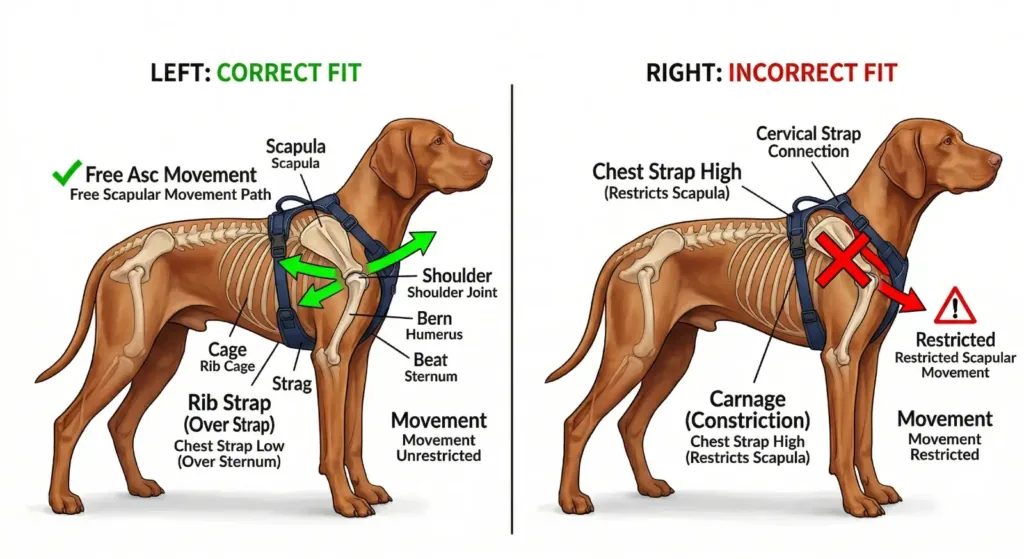
When properly fitted, the horizontal chest band sits low on the sternum—well below the scapular operating zone. Vertical straps run alongside the neck without crossing it.
Result: Zero interference with scapular glide. Gait analysis shows nearly identical shoulder range of motion to harness-free movement.
The Norwegian Harness Reality
Here’s where precision matters: any horizontal chest strap becomes a barrier if placement is off by even 1 centimeter. During extension, the shoulder blade hits this unyielding surface instead of gliding freely.
Compensatory patterns we observe:
- Shortened stride length
- Increased lumbar flexion
- Altered weight distribution onto forelimbs
Norwegian designs aren’t inherently flawed. But proper fitting becomes exponentially more critical. One size does not fit all when scapular freedom is at stake.
Decision Framework: When to Choose Which
| Choose H-Harness When | Consider Norwegian When |
|---|---|
| Puppy, senior, or shoulder-sensitive dog | Maximum redirection needed for powerful puller |
| Varied terrain (hiking, trail running) | Short, controlled leash walks |
| Deep-chested or sighthound breed | Professionally fitted with verified scapular clearance |
| All-day comfort priority | Specialized tool use, not 24/7 wear |
| Dog shows “pacing” gait or shoulder bunching in other harnesses | You understand trade-offs between control and movement |
The 4-Step Fitting Protocol
After fitting 200+ dogs, I follow this non-negotiable checklist:
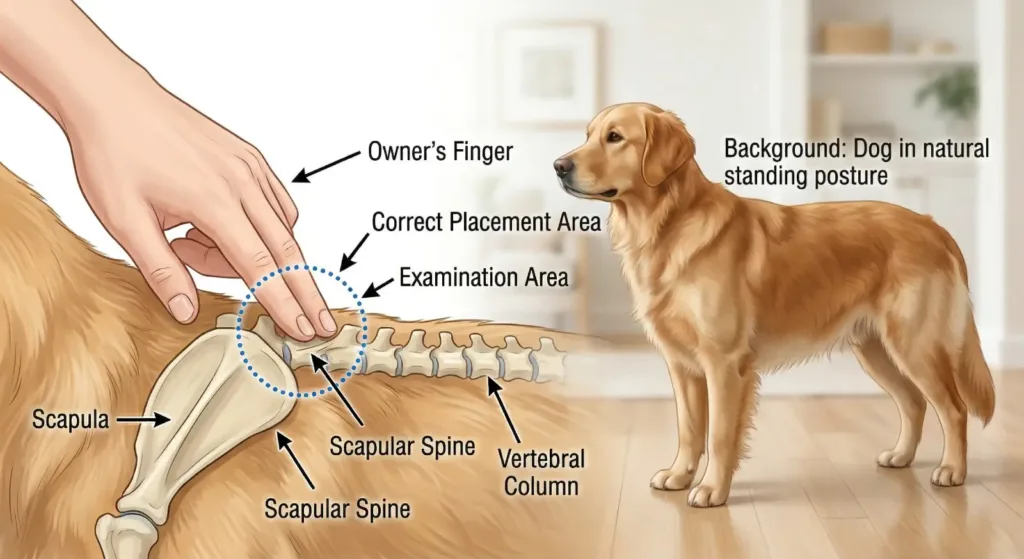
Step 1: The Stand Test
Place fingertips on the shoulder where the scapula spine protrudes. You should feel bony prominences—not muscle bunching or tight straps.
Step 2: The Motion Test
Have your dog walk slowly toward you. Feel for smooth, gliding scapular motion under your fingers. Any hesitation, catching, or asymmetry means stop and reassess.
Step 3: The Load Test
Apply gentle forward pressure with leash attached. Pressure should distribute across the chest cage—not lift or shift the scapula.
Step 4: The Two-Finger Rule
Slide two fingers flat between harness and body—not just pinch loose fabric. Snugness without compression of moving parts.
What About Pulling?
The most common objection I hear: “But my dog pulls less in a Norwegian harness.”
Short-term control and long-term orthopedic health are different metrics. A dog who pulls less may be doing so because shoulder extension is mechanically limited—not because they’re learning better leash manners.
For chronic pullers, I recommend:
- H-harness for movement preservation during training
- Front-clip configuration for directional guidance
- Professional training protocols that address motivation, not just mechanics
Frequently Asked Questions
Can I use a Norwegian harness for hiking?
Only if professionally fitted with verified low strap placement. For varied terrain requiring full shoulder articulation, H-harness remains the safer default.
Is H-harness safe for strong pullers?
Yes—with proper training integration. The harness preserves shoulder health while you address the pulling behavior through training, not equipment restriction.
How do I know if my current harness is causing problems?
Watch for: shortened front stride, “pacing” gait (both legs on same side moving together), reluctance to extend fully on walks, or shoulder muscle bunching visible under coat.