E-mail Us at info@wingtupet.com
Call Us at Wingtu Pet | Whatsapp +1- 626 734 5510

Get A Quote
Lots of dog owners look at a harness and see a simple accessory. But if you look closer, it is actually a tool to manage force. The main difference between a front-clip and a back-clip harness isn’t complicated. It comes down to one thing: where the leverage hits relative to your dog’s center of gravity.
To pick the right one, you have to see how the position of the D-ring (that metal ring where your leash clicks on) changes the conversation between you and your dog.
1. The Back-Clip Harness: The “Force Distributor”
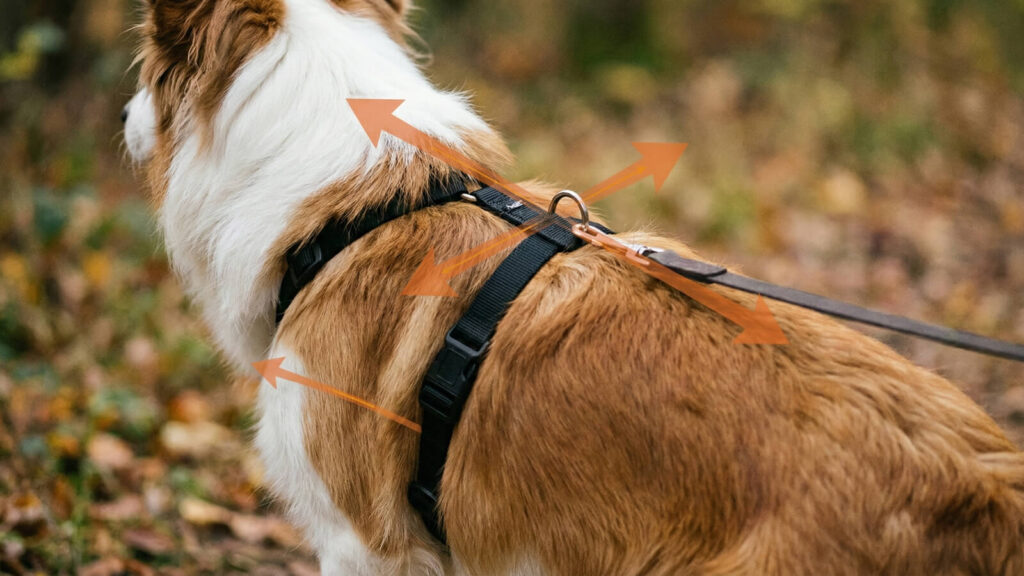
You see this design everywhere. Here, the D-ring sits on the dog’s back. It usually rests right between the shoulder blades.
Structural Logic: When the leash gets tight, the pressure spreads out. It goes across the dog’s chest and ribcage. The attachment point stays behind the dog’s center of gravity.
Best Scenarios:
- Casual Walking & Sniffing: This is great for trained dogs. It works well if they already know how to walk with a loose leash.
- Long-Line Activities: Are you using a long line (15ft+) for sniff walks? The back clip stops the leash from getting tangled between the dog’s front legs.
- Jogging/Canicross: These are made to let the dog pull forward without holding them back.
The “Sled Dog” Gap (Common Pain Point): People often complain about back-clip harnesses. They say: “My dog pulls harder now.” The Reason: This happens because of the Opposition Reflex. When a dog feels a pull from behind near the shoulders, their natural instinct kicks in. They lean forward. Then, they pull against it. Since the back clip offers no leverage to turn them, the dog can use all their weight to drag you. It is just like a sled dog.
2. The Front-Clip Harness: The “Steering Wheel”
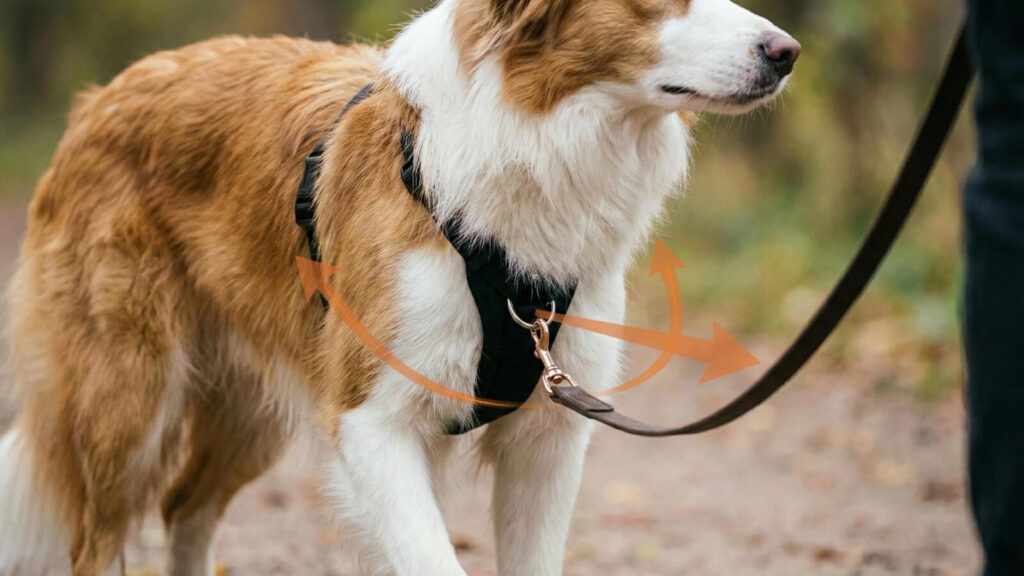
On this version, the D-ring sits right on the center of the dog’s chest.
Structural Logic: The attachment point sits ahead of the dog’s center of gravity. Say the dog pulls forward and the leash goes tight. The tension creates a pivot point. The mechanics stop the dog from driving ahead. Instead, the pressure turns their torso back toward you.
Best Scenarios:
- Pulling Management: It gives you a mechanical edge. This helps if you are physically smaller or weaker than your dog.
- High-Distraction Environments: This is helpful in the city. You might need to quickly turn the dog’s focus away from triggers, like squirrels or other dogs.
The Operational Gap (Usage Details):
- Leg Entanglement: The leash attaches low on the chest. So, it often gets tangled in the dog’s front legs. This happens if there is too much slack. You have to pay closer attention to the leash.
- Gait Restriction: Some front-clip harnesses can be tricky. Specifically, the ones with a flat strap across the shoulders might limit how the dog extends their front limbs.
Expert Note: A front-clip harness doesn’t teach a dog not to pull. It simply manages the pulling physically. You still need training to change the habit for good.
3. Structural Analysis: The “Y” vs. The “T”
When you pick a type, look at the neck opening. The shape is key for your dog’s joint health over time.
- The Y-Harness (Recommended): The straps here make a Y-shape around the neck. This leaves the shoulders free to move. A good design fits both front and back clips without blocking movement.
- The T-Harness (Norwegian Style): A single strap goes across the chest horizontally. Sure, they are easy to put on. But this design often blocks the shoulder blades (scapula) when the dog moves. If you use a front clip on a T-harness, the rotation causes issues. The harness might slide too much, and that leads to friction (chafing) in the armpits.
4. Summary: How to Decide
Don’t hunt for the “best” harness. Instead, find the one that works for what you are doing right now.
| Feature | Back-Clip | Front-Clip |
| Mechanical Control | Low (Dog has leverage) | High (Owner has leverage) |
| Leash Tangling | Rare | Frequent (requires management) |
| Influence on Gait | Minimal | Moderate (depends on fit) |
| Primary Use | Hiking, casual walks, jogging | Training, city walks, managing pulling |
The Rational Choice (Dual-Clip): Newer harness designs often have both attachment points. This is usually the smartest buy.
- Action: Start the walk using the front clip. Use it to manage excitement and pulling until the dog settles down.
- Action: Once the dog is calm and walking nicely, switch the leash. Move it to the back clip to reward them with more freedom.
Frequently Asked Questions
Q: Will my dog slip out of a front-clip harness?
A: It is possible. This usually happens if your dog hits the brakes and backs up quickly. When they do that, the harness can slide over their head. The Fix: Make sure the fit is snug, but not tight. If your dog is a known escape artist, use a “backup clip.” This is a small strap that connects the harness D-ring to their collar. It adds a safety net.
Q: Which style is better for a puppy?
A: Start with a Y-Harness that has a back-clip. Puppies are fragile. Their bones and joints are still soft. You want to avoid anything that twists their body too hard. The Strategy: Use the back clip for exploring. If the puppy pulls like crazy, you can switch to the front-clip for short training lessons. Just don’t leave it there all day.
Q: Why does the harness rub my dog’s armpits?
A: This is usually a fit issue. It happens often with front-clip harnesses. If the chest strap is too loose, the weight of the leash pulls the whole thing down. This pulls the side straps up into the armpits. The Fix: Check the fit. You might need to tighten the front straps slightly. Or, look for a harness design where the side buckles sit further back on the ribs, away from the front legs.