E-mail Us at info@wingtupet.com
Call Us at Wingtu Pet | Whatsapp +1- 626 734 5510

Get A Quote
It’s a strange situation that happens in many hallways. You grab the leash. You say the word “walk.” Your dog gets excited. But the moment you pick up the harness, everything changes.
Maybe they run under the table. Maybe they freeze like a statue. Or perhaps they just stand there, licking their lips and looking away.
This is what we call dog harness anxiety. It is frustrating, yes. But it is rarely about being stubborn. Usually, your dog isn’t trying to be difficult. They are trying to tell you that the gear feels wrong.
To fix this, we need to stop thinking about “training” for a moment. Instead, we need to look at the design of the gear itself. Often, the harness triggers a natural fear response because of how it looks, sounds, or feels.
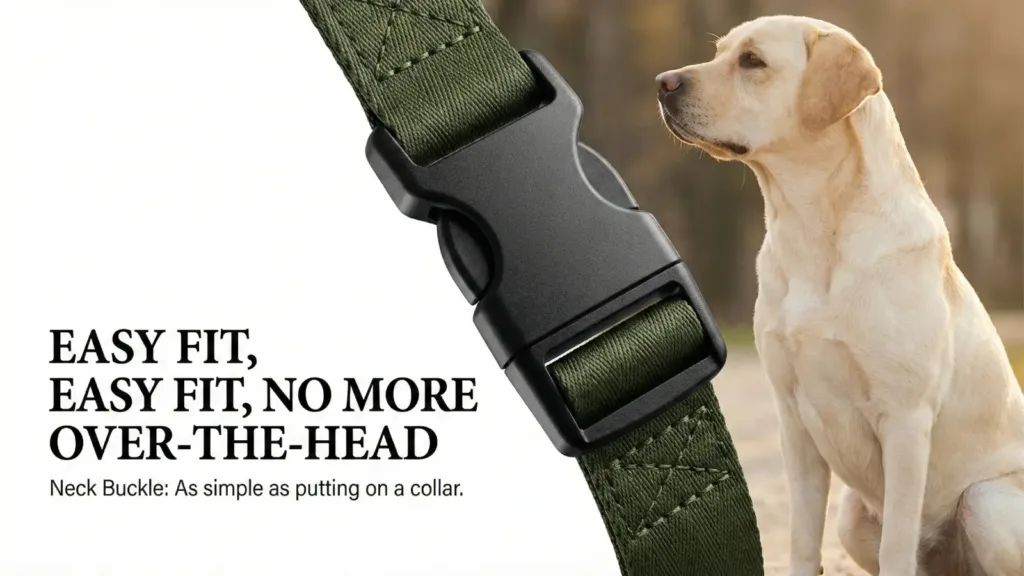
The “Looming” Threat: Going Over the Head
For us, putting a harness on is just a step in the routine. For a dog, it can look like a threat.
Think about the standard “H-harness.” To put it on, you have to hold the loop open. Then, you reach over the dog and force the loop down past their ears.
In dog language, reaching directly over the head is dominant. It can feel like a trap. When an object comes down from above, it blocks their vision. This triggers a “flight” response. If your dog backs away or ducks their head, they are feeling this pressure. They aren’t being bad; they are feeling unsafe.
The Fix: If your dog hates the “over-the-head” move, look for a different design.
- Neck Buckles: Some harnesses have a clip on the neck strap. You can wrap it around their neck like a collar. No need to slide anything over the ears.
- Step-in Harnesses: These let the dog step into the loops on the floor. Nothing goes over the head at all.
The Sound Trigger: That Loud “Click”
We know dogs hear much better than we do. But we often forget how loud a plastic clip sounds to them.
Most harnesses use heavy plastic buckles. When you snap them shut, they make a sharp, high-pitched click. This sound happens right next to your dog’s ribs. Or worse, right behind their ears.
If your dog is sensitive to noise, that click is startling. Over time, they learn a pattern: See Harness → Hear Scary Click → Feel Trapped. The harness predicts the noise. So, dog harness anxiety builds up before you even touch them.
The Fix: Pay attention to the hardware.
- Silent Fasteners: Look for magnetic buckles or sliding metal clips. They are much quieter.
- Buckle Placement: Choose a design where the clips are high up on the back, far away from sensitive ears.
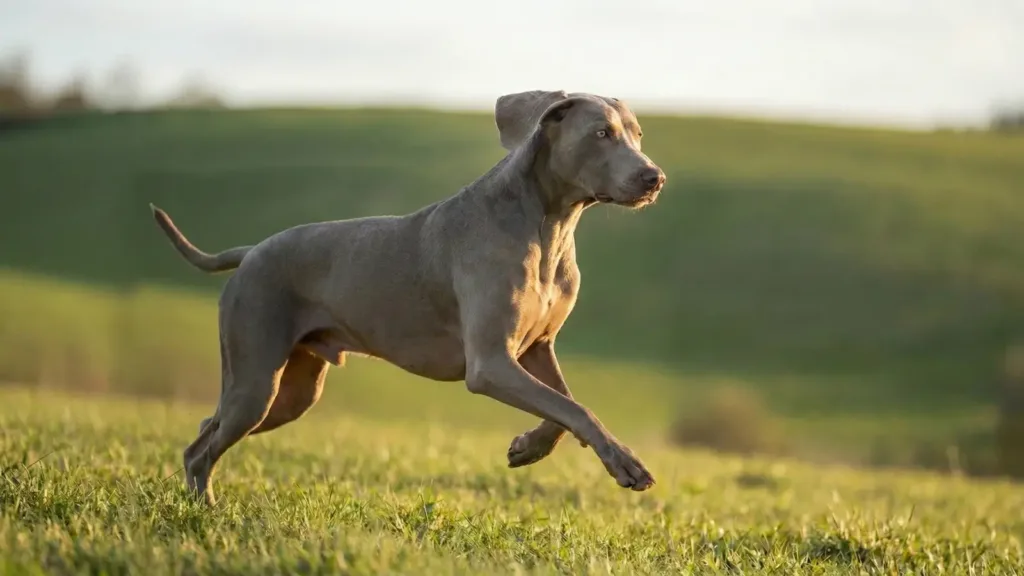
Movement Restriction: The “Straight-Front” Problem
Does your dog let you put the gear on, but then walks weirdly? Maybe they take short, stiff steps. Or they refuse to shake off.
This is often a mechanical issue. Many popular “no-pull” harnesses use a horizontal strap that goes straight across the chest (often called a T-shape).
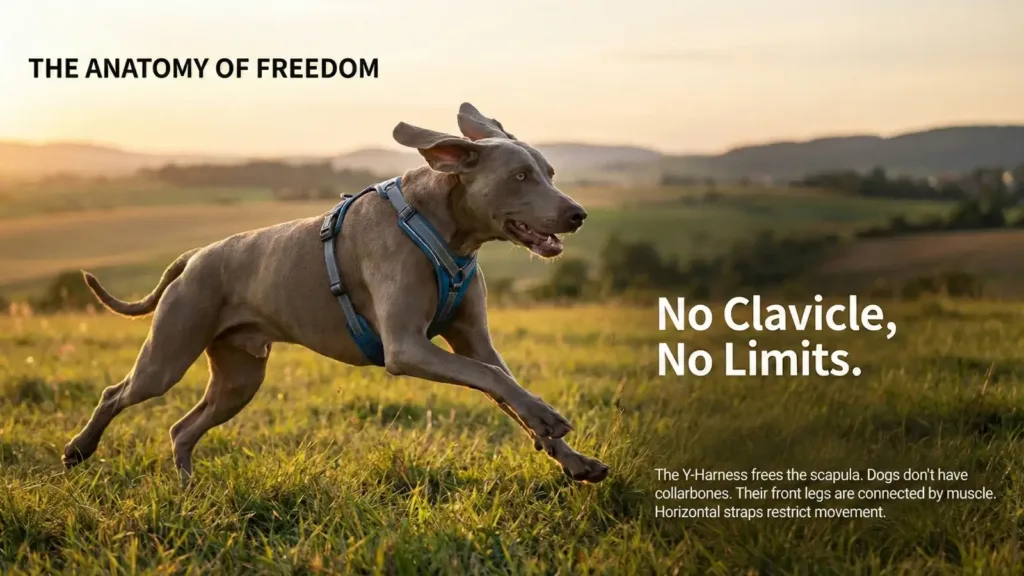
Here is the anatomy fact: Dogs don’t have collarbones. Their front legs are attached by muscle only. For a dog to extend their front leg forward, their shoulder blade (scapula) has to rotate backward.
A horizontal strap cuts right across that shoulder joint. It physically stops the leg from moving fully. Imagine trying to run with a belt tied around your biceps. It’s annoying, and it restricts your ability to react. This loss of freedom causes stress.
The Fix: Switch to a Y-shape harness. These designs have a strap that goes between the front legs and joins around the neck. The shoulder blades stay completely free. Your dog can move naturally. When the body feels free, the mind feels calmer.
Friction and Fit: The Hidden Pain Points
Sometimes, the anxiety is just about physical pain.
A loose harness can chafe. A tight one can pinch. The most common trouble spot is the “armpit” (the axilla). If the harness sits too close to the front legs, the webbing rubs against that thin skin with every step.
If you see your dog scratching at the harness or refusing to walk forward, check their skin. Look for ruffled fur or pink skin behind the elbows.
The Fix: Look for a harness with a longer “keel” (the bottom strap). This pushes the girth strap further back, away from the armpits.
How to Move Forward
If you are dealing with dog harness anxiety, don’t force it. Pushing through the fear usually makes it worse.
- Check the Gear: Is it restricting their shoulders? Is the buckle too loud? Does it have to go over the head?
- Change the Scene: Put the harness on the floor. Put treats around it. Let your dog investigate it without wearing it.
- Audit the Fit: Ensure two fingers can fit under the straps, and check those armpits for rubbing.
A harness should be a tool for adventure, not a cause for stress. By choosing gear that respects your dog’s biology, you can turn the “freeze” back into a “wage.”
Frequently Asked Questions
Q1. My dog runs away every time I pick up the harness. Should I just corner them and put it on quickly? A: No, please avoid doing that. Chasing your dog or cornering them turns the harness into a “trap.” This confirms their fear that the object is scary. Instead, try “counter-conditioning.” Leave the harness on the floor near their food bowl or toy box. Let them sniff it on their own terms. When they look at it or touch it with their nose, give them a high-value treat. You want to change the story in their head from “Harness = Scary Trap” to “Harness = Snacks.”
Q2. Is a collar better than a harness for a fearful dog? A: Generally, a harness is still safer, but the type matters. If an anxious dog gets spooked on a walk and lunges to run away, a collar puts all that pressure directly on their windpipe. That pain can make their panic worse. A well-fitted Y-shape harness spreads that pressure across the chest, which is safer. If your dog hates the harness going over their head, try a step-in design instead of switching back to a collar.
Q3. Why does my dog freeze and then try to back out of the harness? A: This “backing out” move is a classic escape instinct. It usually happens for two reasons. First, the fit might be wrong—if the harness is too loose, they learn they can slip it. Second, and more likely, the harness is restricting their movement. If they feel like they can’t extend their front legs (common with straight-front designs), they feel trapped. “Putting on the brakes” and backing up is their way of trying to regain physical freedom.