E-mail Us at [email protected]
Call Us at Wingtu Pet | Whatsapp +1- 626 734 5510

Get A Quote
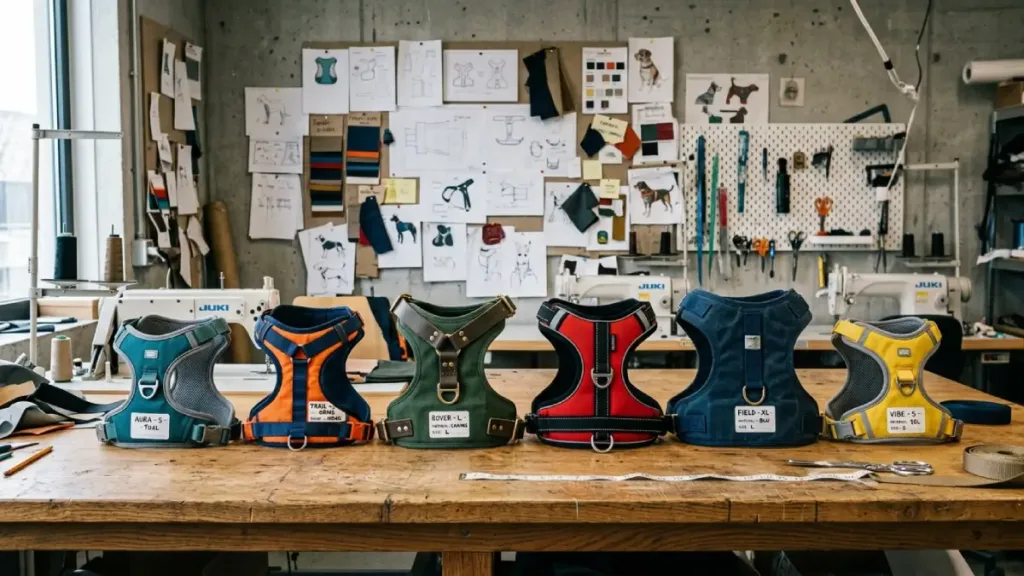
Custom Harnessing Is More Than Slapping on a Logo
A lot of pet brands come to their first factory thinking it’s as simple as “pick a style, print a logo, done.” The reality is way more involved. Having managed production orders at Wingtupet’s factory for over a decade, I’ve watched too many brands trip over the same mistakes — samples going back and forth eight times, unacceptable color deviation on bulk goods, delivery dates slipping by weeks. Nearly all of these issues can be avoided with better upfront communication.
This article breaks down Wingtupet’s standard custom process. Whether you’re a pet shop owner launching a private label or a cross-border e-commerce seller building a product line, these six steps will save you at least three weeks of back-and-forth.
Step 1: Requirements Intake — The More Detail, the Smoother It Goes
What to Include in Your Inquiry
An ideal requirements brief covers five things: product use case (daily walks or hiking trips), target dog breeds and size range, preferred materials (nylon, neoprene, leather, or a mix), estimated order quantity, and target price bracket. If you have reference images or competitor product links, send those too — a picture tells us more than a thousand words of description.
Wingtupet’s Quick Assessment
After receiving your inquiry, our sales team gives a preliminary assessment within 24 hours — material recommendations, estimated unit price, sample fees, and lead times. The key at this stage is honesty. Tell us your real budget, and we’ll recommend the best solution within it. Hoping for a $2 harness that looks like it costs $8? That’s not realistic, but we can show you how to maximize quality within what you’ve got to spend.
Step 2: Design — Put Your Ideas on Paper
Structural Design
Once you confirm the partnership, Wingtupet’s 3D modeling team creates a digital render based on your requirements. This step locks in the overall harness structure — H-shaped, Y-shaped, or escape-proof style — and the placement of every component including buckles, D-rings, reflective strips, and the handle.
Color and Print Matching
Pantone color codes are the universal language for color matching. Give us your brand colors, and we’ll sample them within acceptable tolerances. For prints and patterns, send vector files in AI or CDR format. Our digital printing machines handle full-color gradients and fine details, with a minimum of just 30 pieces for custom prints.
Step 3: Sampling — Turning the Design Into a Real Product
Standard Sampling Timeline
After design approval, the project moves into sampling. Wingtupet’s standard turnaround is 72 hours — one of the faster timelines in the industry. Sample fees run between $50 and $200 depending on complexity, and they’re refundable once you place the bulk order.
What to Check on Your Sample
When the sample arrives, inspect these five things:
- Size accuracy — measure against the spec sheet
- Hardware feel — buckle smoothness, D-ring strength
- Stitch quality — even stitches per inch throughout
- Material hand-feel — nylon softness, neoprene thickness
- Wearability — actually put it on a dog to test ease of use
Our 97.6% first-sample pass rate isn’t luck — we run a detailed QA review before cutting anything, making sure we get it right the first time.
Step 4: Final Approval — Your Last Chance to Make Changes
Once the sample is approved, every spec is locked into Wingtupet’s production system. This is your last opportunity to make changes — once bulk production starts, any modification affects delivery time and cost.
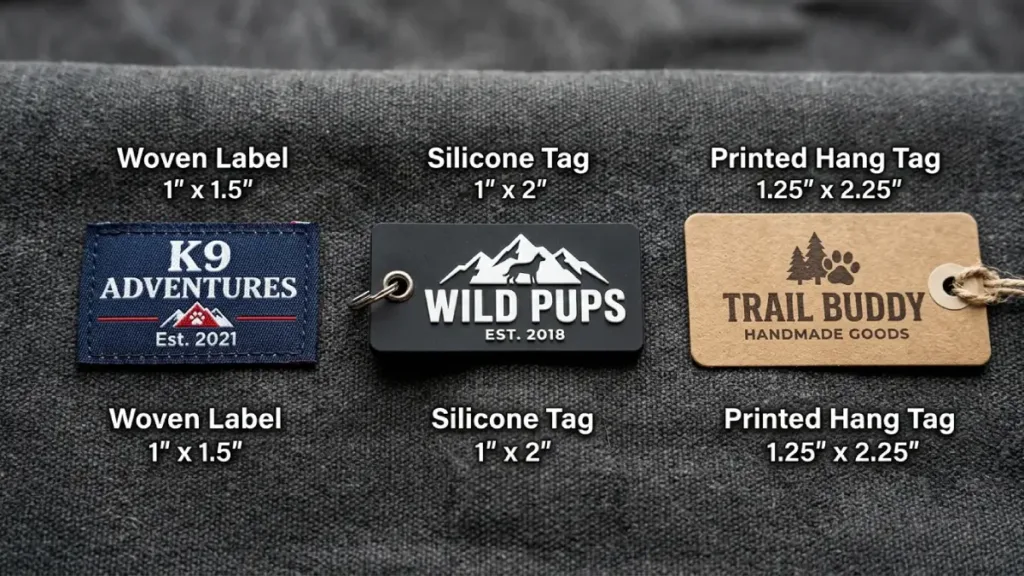
This stage is also when you lock in the packaging plan. Plain poly bags or full-color hang card packaging? Wingtupet offers packaging customization from simple PVC bags to premium gift boxes, including branded hang tags, woven labels, care labels, and UPC barcodes.
Step 5: Bulk Production — Quality Control Is Everything
Production Workflow
Once the order is confirmed, Wingtupet’s 3,000㎡ vertically integrated factory schedules production. Fabric cutting, printing, sewing, assembly, inspection, packaging — everything happens in-house. That means we control quality and timing at every step, start to finish.
In-Process Inspection
Our QC team inspects at critical checkpoints during production:
- Cutting stage — check fabric for color variation between batches
- Sewing stage — check stitch count and seam alignment
- Assembly stage — check hardware attachment strength
- Finished product — 100% pull testing on critical stress points
Common Mistakes Brands Make When Ordering Custom Harnesses
After processing hundreds of custom orders, I’ve seen the same mistakes come up again and again. Here are the ones that cost brands the most time and money.
Mistake #1: Asking for too many samples without a clear decision process. Some brands ask for three, four, even five rounds of samples, changing one detail each time. That drives up costs and delays the entire project. The fix is simple: before you approve a sample round, write down exactly what you need to evaluate. Don’t approve “let’s see how it looks” — approve specific checkpoints.
Mistake #2: Not accounting for production tolerances. A handmade product has natural variation. Webbing color can shift 5% between dye lots, stitching tension can vary slightly, and neoprene thickness has a manufacturing tolerance of about 0.5mm. Brands that don’t understand this set themselves up for disappointment. Clarify the acceptable tolerance range upfront — how much color variation is OK, what stitch density range is acceptable.
Mistake #3: Underestimating lead times for peak season. If you need Chinese New Year production, you need to place your order by November at the latest. Our factory shuts down for two weeks during Spring Festival, and the two months before that are the busiest of the year. I’ve seen brands place orders in January expecting March delivery, then get surprised by the delay. Plan backward from your target delivery date, adding buffer for customs and shipping variability.
Mistake #4: Changing the spec after bulk production has started. This is the most expensive mistake. Once the fabric is cut and the buckles are assembled, changes mean scrapping material and restarting. The total cost of a late-stage change can be 3-5x the original unit price for that batch. Lock your design at sample approval and treat any after-change as a separate project.
Mistake #5: Not visiting the factory. For a serious order, visit the factory in person or arrange a video walkthrough. Seeing the production line, meeting the QC team, and checking the material warehouse tells you more than any certificate or sample can. Yiwu is well-connected — it’s a two-hour train from Shanghai or a direct flight from most Chinese cities.
Avoid these five mistakes and your custom harness project will move 30-40% faster than average.
FAQ: Custom Harness Ordering
Q: What’s the minimum order quantity?
A: Wingtupet’s MOQ is 30 pieces per style. This allows you to test a new design with minimal financial risk before committing to larger volumes.
Q: How long does a typical order take from start to finish?
A: For a new design, expect 6-8 weeks total: 1 week for design and approval, 1 week for sampling, 4-5 weeks for bulk production, and 1-2 weeks for shipping (depending on destination and transport mode). Existing designs with minor modifications can be faster — about 4-5 weeks.
Q: Can I mix different models in one container to save shipping?
A: Yes. Wingtupet consolidates multiple SKUs into a single shipment. Many of our retail partners combine 4-6 different harness models in one container, along with matching leashes and collars.
Q: Do you help with customs documentation?
A: Yes. We provide all required export documentation including packing lists, commercial invoices, certificates of origin, and compliance test reports. For EU-bound shipments, we prepare the CE technical file. For US-bound shipments, we provide CPSIA compliance documentation.
Q: Can you match a specific Pantone color?
A: We can match any Pantone color within standard textile tolerances (ΔE < 1.5). Keep in mind that color appearance varies between material types — the same Pantone code looks slightly different on nylon webbing versus neoprene padding. We’ll send a color chip sample before production so you can verify.
Q: What payment terms do you offer?
A: Standard terms are 30% deposit with order and 70% balance before shipment. For established partners with a proven order history, we can discuss more flexible terms.
Step 6: QC and Shipment — The Final Gate
Outgoing Inspection Standards
Every bulk order goes through Wingtupet’s three-tier inspection system: self-inspection (production line), peer inspection (quality control department), and specialized inspection (third-party random sampling). All inspections follow ISO 9001 quality management standards and EU pet product safety directives.
Shipping and Logistics
Wingtupet maintains a 98.3% on-time delivery rate across 18 international shipping routes. From Yiwu to major EU and US ports, expect 25-35 days by sea or 5-7 days by air. We also help customers prepare export customs documents and technical documentation needed for CE certification.
Ready to launch your pet brand’s product line? Wingtupet offers end-to-end custom dog harness services — from requirements intake to bulk delivery — with an MOQ of just 30 pieces. Get a quote today.