E-mail Us at info@wingtupet.com
Call Us at Wingtu Pet | Whatsapp +1- 626 734 5510

Get A Quote
Every person with a dog hits a common wall eventually. We call it the gear confusion. You walk into a shop. Maybe you browse the web. Suddenly, you see too much advice. The harness vs collar debate is loud. Some trainers promise results with collars. Vets often say no. They prefer a harness for safety.
The truth is simple. No single tool is “best” on its own. You have to look at how the gear works. It depends on your dog’s body. It depends on how they act.
Here is a look at the real logic. We will skip the sales talk. Let’s see how dog leashes, collars, and harnesses work in real life.
1. The Dog Collar: Communication vs. Restraint
For years, the flat collar was standard. It holds ID tags well. But walking is different. There are limits. These limits come from physics.
- The Mechanics: A collar puts all force on one spot. That spot is the neck.
- The Risk: Imagine a dog that pulls hard. Or maybe they lunge. This pressure hits the throat. It hurts the trachea.
- The Professional View: Trainers use flat collars, sure. But usually for dogs that walk calmly. The leash hangs loose. The collar is just a backup. It is not for hard control.
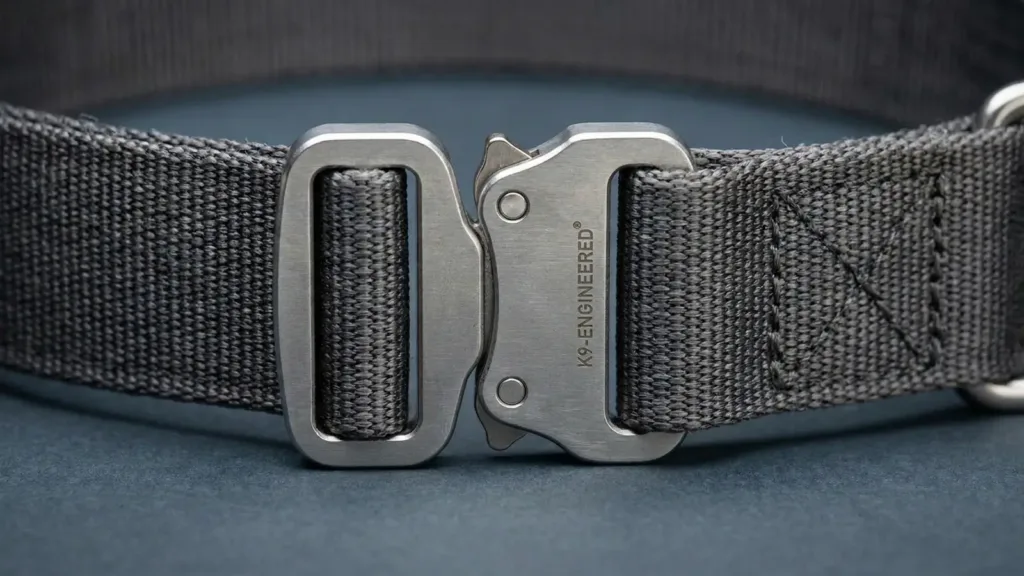
Selection Note: Buying from a manufacturer? Check the buckle. It needs a high load rating. It must handle sudden jerks. Static weight is not enough.
2. Dog Harness Safety: Structure Matters
Harnesses vary a lot. Stores are full of them. Some look tough. But owners often worry and ask: “Is a harness bad for dogs shoulders?”
The answer is: It depends on the shape.
The “No-Pull” Logic (Front vs. Back Clip)
- Back-Clip: The ring is on the back. It feels easy. But it can cause a reflex. The dog feels a pull back. So, they pull forward.
- Front-Clip: This puts the clip on the chest. It changes the leverage. The dog pulls. The leash gets tight. The dog’s body turns toward you. It uses physics. No pain needed.
The Geometry: Y-Shape vs. T-Shape
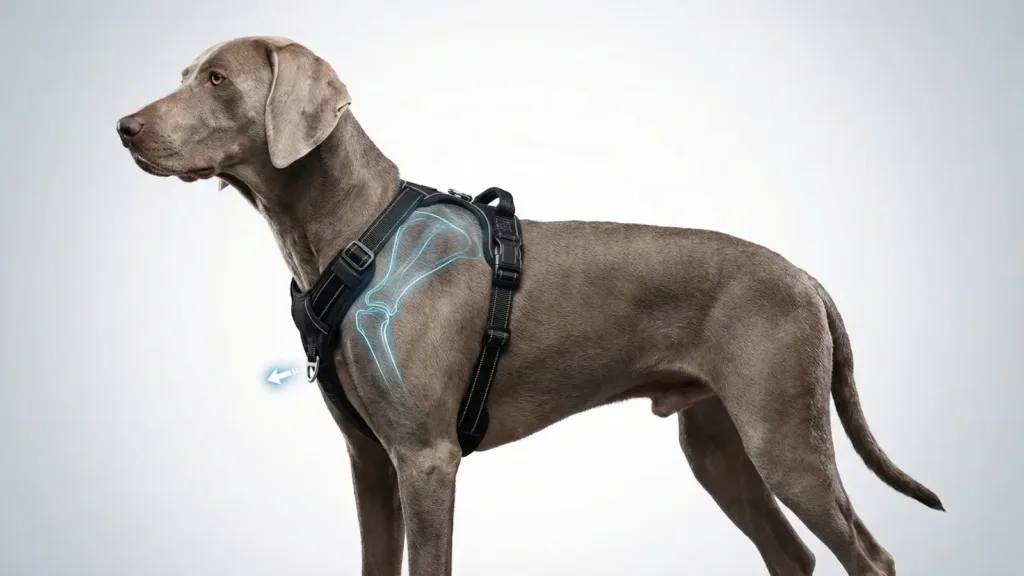
- T-Shape: A strap goes across the chest. It is easy to put on. But watch out. It blocks the shoulder blade. This is why people worry about shoulder health.
- Y-Shape: Straps go between the legs. They go around the neck. Shoulders stay free. This is the safe choice.
(For fearful dogs): If you are looking for a harness for dogs that back out (escape artists), avoid simple designs. Look for a harness with a third strap around the belly (often called a 3-point harness). It stops them from slipping loose.
3. Dog Leashes: The Connection Point
The leash connects you two. The material changes things.
- Material:
- Nylon: Standard. Strong. But watch out for burns if the dog runs.
- Biothane: This is getting popular. It grips well. Even when wet. It cleans up fast. Great for outside.
- Leather: It has a natural stretch. It gets soft. Trainers like the feel.
- Structure: Good gear needs strong sewing. Look for “Box X” stitching. Check near the clip. This spot breaks first.
4. Scene Mapping: Choosing the Right Combo
Pros switch things up. They match the gear to the job.
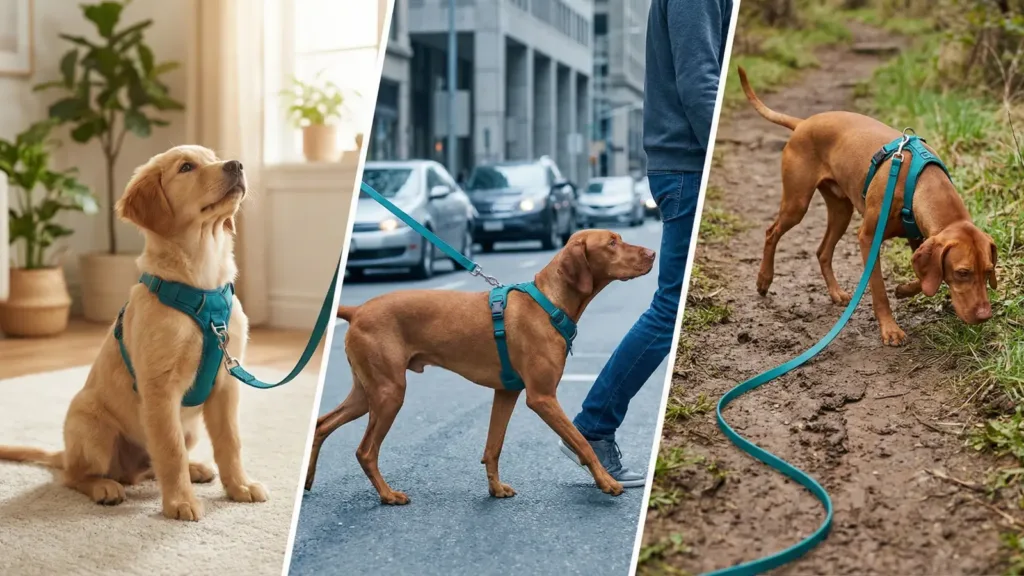
Scene A: The Puppy / The New Rescue
- The Question: We often get asked about collar vs harness for puppy pulling.
- Combo: Y-Shape Harness + Double-ended Leash.
- Logic: Puppies are fragile. You want to guide them, not choke them. Clip the leash to the front. Clip it to the back too. It acts like a steering wheel. You guide the body. No pulling on a tiny neck.
Scene B: High-Traffic City Walk
- The Skill: Leash training in a city is hard. You need to know how to use a front clip harness effectively.
- Combo: Fixed leash (4ft or 6ft) + Front-clip Harness.
- Logic: A short leash stops wandering. No walking into roads. When you use the front clip, if they lunge at a bird, the pressure turns them back to you. It creates a “check-in” moment naturally.
Scene C: Off-Leash Training / Hiking
- The Goal: Long line training.
- Combo: Biothane Long Line. Back-clip harness.
- Logic: People ask about the best leash length for recall training. Usually, 15 to 30 feet is perfect. It gives freedom but keeps them safe. The back clip stops tangles. Biothane does not get heavy in mud. Note: Never clip a long line to a collar.
Summary for Buyers
Buying gear? Stocking a shop? Look past the colors. Ignore the patterns. Look at the construction.
- Stitching: Is it reinforced?
- Hardware: Is it cheap Zinc? Or strong Steel?
- Fit: Can the shoulders move?
Good gear handles stress. It is not just about looks.
Frequently Asked Questions (FAQs)
Q1: Is a collar or harness better for a puppy? A: Most vets and trainers recommend a Y-shape harness for puppies. Young dogs move unpredictably. A harness protects their fragile neck and windpipe from sudden jerks, whereas a collar can cause injury if they lunge.
Q2: Will using a harness make my dog pull more? A: It depends on the design. A back-clip harness can trigger a “pulling reflex” (like a sled dog). To stop pulling, use a front-clip harness. It steers your dog’s shoulders sideways, making it mechanically hard for them to drag you.
Q3: What is the best leash material for hiking? A: We recommend Biothane. Unlike nylon (which gets heavy when wet) or leather (which ruins in mud), Biothane is waterproof, smell-proof, and easy to wipe clean after a messy adventure.