E-mail Us at info@wingtupet.com
Call Us at Wingtu Pet | Whatsapp +1- 626 734 5510

Get A Quote
As responsible pet owners, we all hope that our dogs are both safe and comfortable when they go out. However, there are a wide variety of chest straps on the market. A wrong choice or improper wearing may not only fail to protect the dog in critical moments, but even cause it harm without it even realizing it. Today, we will incorporate the knowledge of professional dog trainers and rehabilitation therapists to help you thoroughly understand the ins and outs of a chest harness.
I. Selection Section
When choosing a chest harness, the first step is not to look at the color, but to see if the structural design respects the physiological structure of the dog.
1. Core no-go Zone: Any design that presses on the shoulder blades is a “bad review”
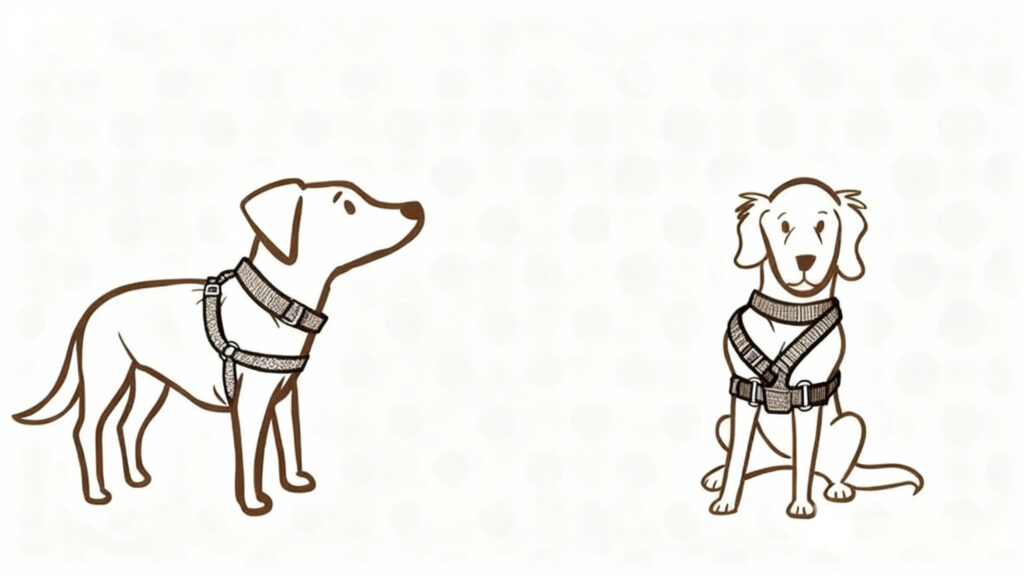
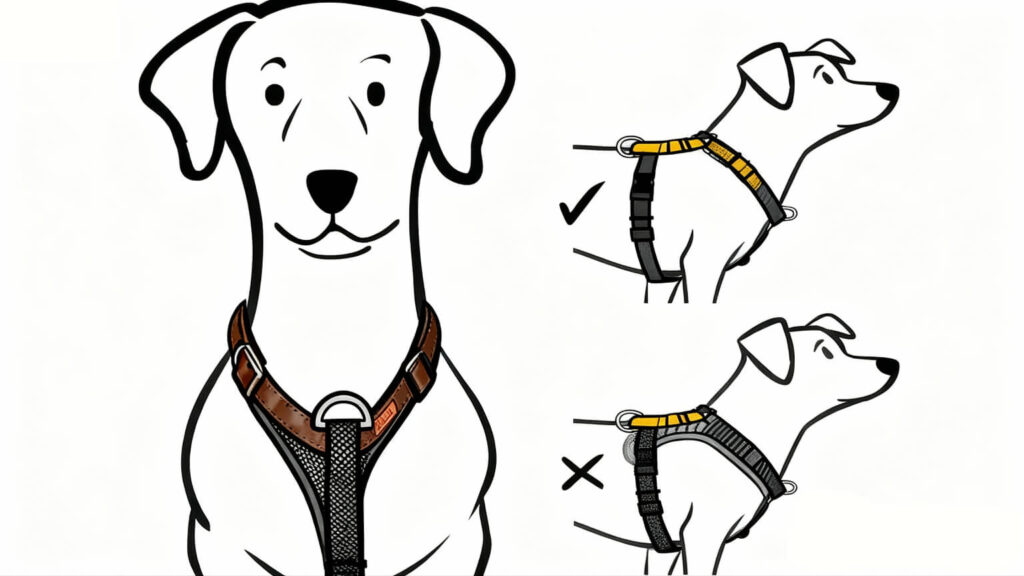
- Error demonstration: The example of the cross clearly shows that the front strap of the chest strap is directly pressed against the top of the dog’s shoulder blades. You can imagine yourself wearing a piece of clothing that is particularly tight under the armpits and constricts the shoulders when you raise your hand. If this continues for a long time, the dog’s gait will be affected, and it may even lead to muscle strain or arthritis.
- The correct choice: An excellent design should be a “Y-shaped” or “H-shaped” front piece, ensuring that the main trunk part passes between and in front of the shoulder blades. This design leaves room for the full swing of the shoulder blades, just like dressing the dog in a well-tailored sportswear, allowing it to run freely.
2. Comfort and Safety: Details are the devil
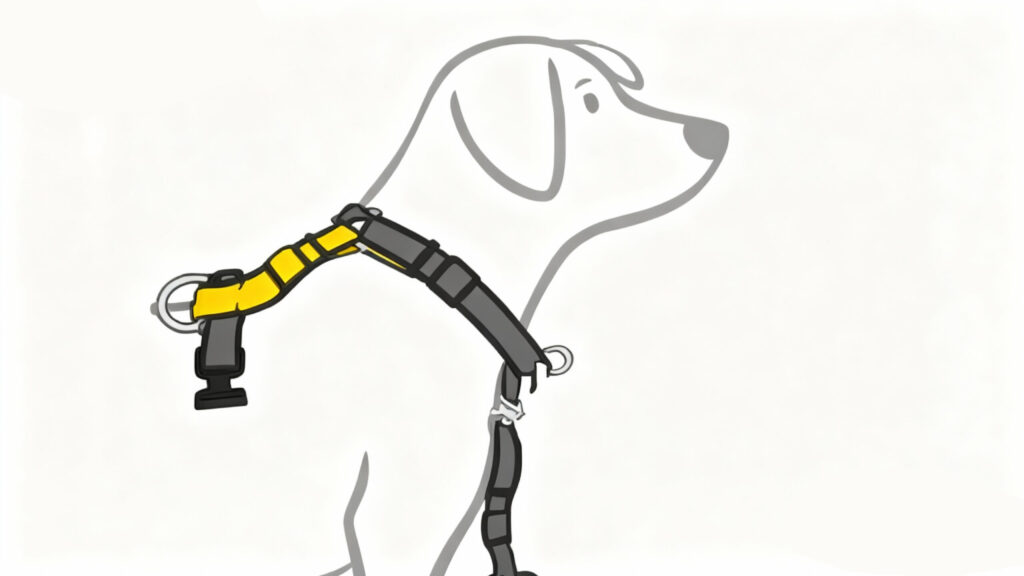
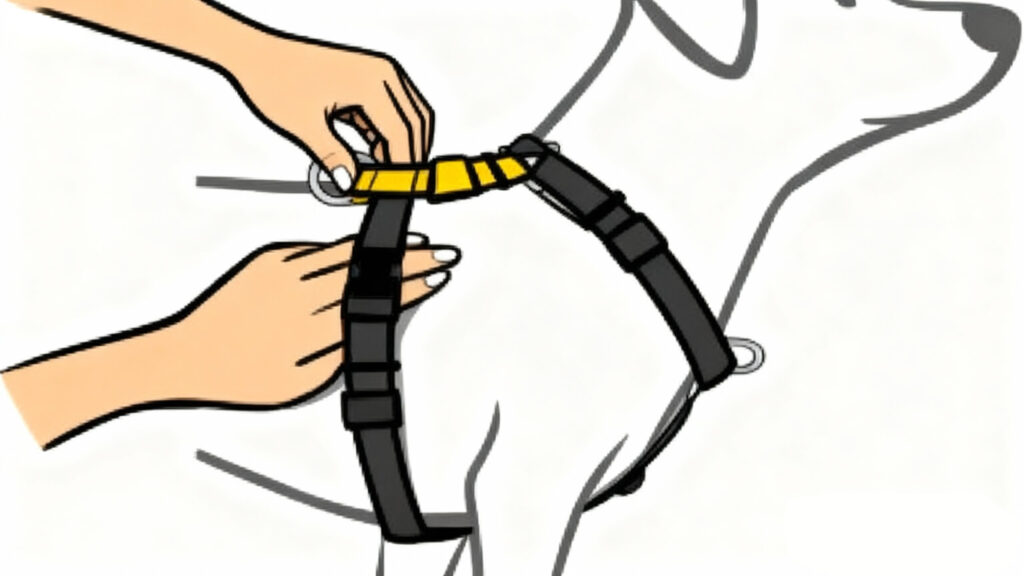
- Cushioning pads are essential: at the main force-bearing points and areas prone to friction such as the shoulders and chest, there must be thickened and soft cushioning pads (as shown in the black part). This can effectively disperse the traction force, preventing strains and shedding due to friction.
- Adjustability determines fit: An excellent chest strap should be tailor-made. Please choose a style with multiple independent adjustment straps like in Figure 3 (especially the yellow adjustment straps are very eye-catching), which allows you to precisely adjust the neck circumference and chest circumference respectively, achieving perfect adaptation to different body types.
Ii. Wearing and Adjustment
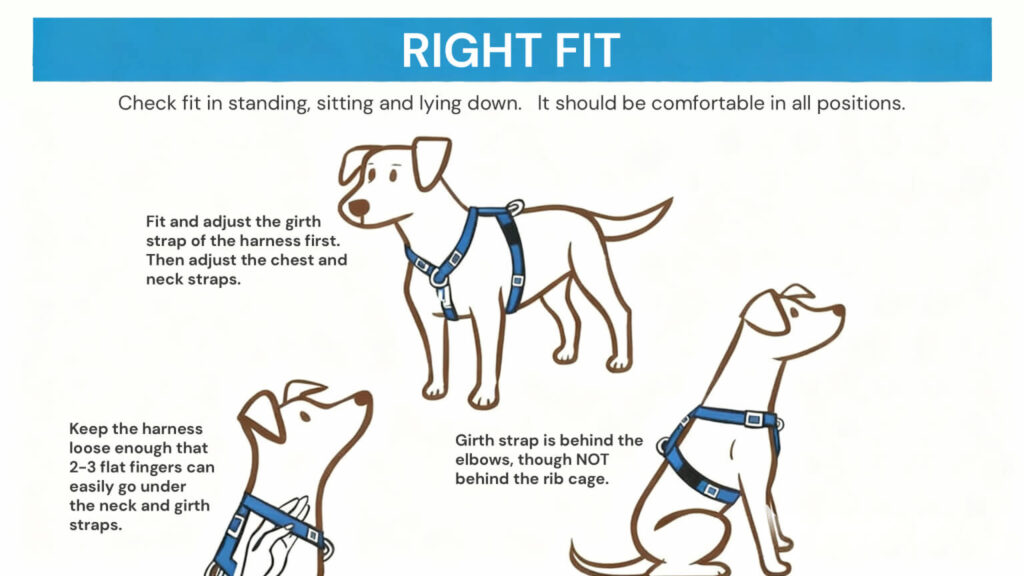
If you make the right purchase, it’s even more important to use it correctly. Incorrect wearing can ruin the best design. Please follow the professional guidelines of “RIGHT FIT”.
The first step: Chest first, then neck
Many parents are accustomed to tightening their necks first, which is a common misunderstanding. The correct sequence should be:
- First, adjust the Girth Strap: After putting it on the standing dog, first find the girth strap that wraps around the widest part of the chest cavity and adjust it to the correct position – close to the sternum, right behind the dog’s elbow joint.
- Adjust the neck strap again: Then, adjust the strap around the neck to a suitable tightness.
Step Two: The “2-3 Finger Principle” and dynamic inspection
- Tightness: After adjustment, ensure that 2-3 flat fingers can be easily inserted under both the neck strap and the chest strap. Note that it is the “flat” fingers, not the fingertips.
- Dynamic testing: This is the most crucial step! Make sure your dog can stand, sit, or even lie down. Ensure that in all these postures, the chest strap is neither too tight nor shifted to the wrong place (such as under the armpits).
Step 3: “Three-View Positioning Method”
- When viewed from the front, the front piece of the chest strap should be flat and fit the sternum, away from the trachea.
- Viewed from the side: All the straps perfectly avoid the vulnerable area under the armpits. The chest strap rests steadily behind the elbows but never on the soft abdomen (behind the rib cage).
- From above: The back traction ring should be firmly located at the midline of the back behind the scapula, so that the force distribution during traction is the most balanced.
Conclusion
A suitable chest strap should not be a tool to bind a dog, but rather a “second skin” to ensure its safety and freedom. It is not only about the convenience of each trip, but also about the long-term bone and muscle health of the dog. Take a few minutes to check and adjust your dog’s chest strap according to this professional guide, and it will be the most tender care for it.